View of Burma, from Two Perspectives
Over the past few weeks, we’ve been busy working on the Society’s art collection – enhancing metadata, sorting through long‑unprocessed items, and bringing catalogues online for easier access. This week, we thought it’d be nice to highlight two newly catalogued collections of 19th‑century artworks that, intriguingly, share a common theme.
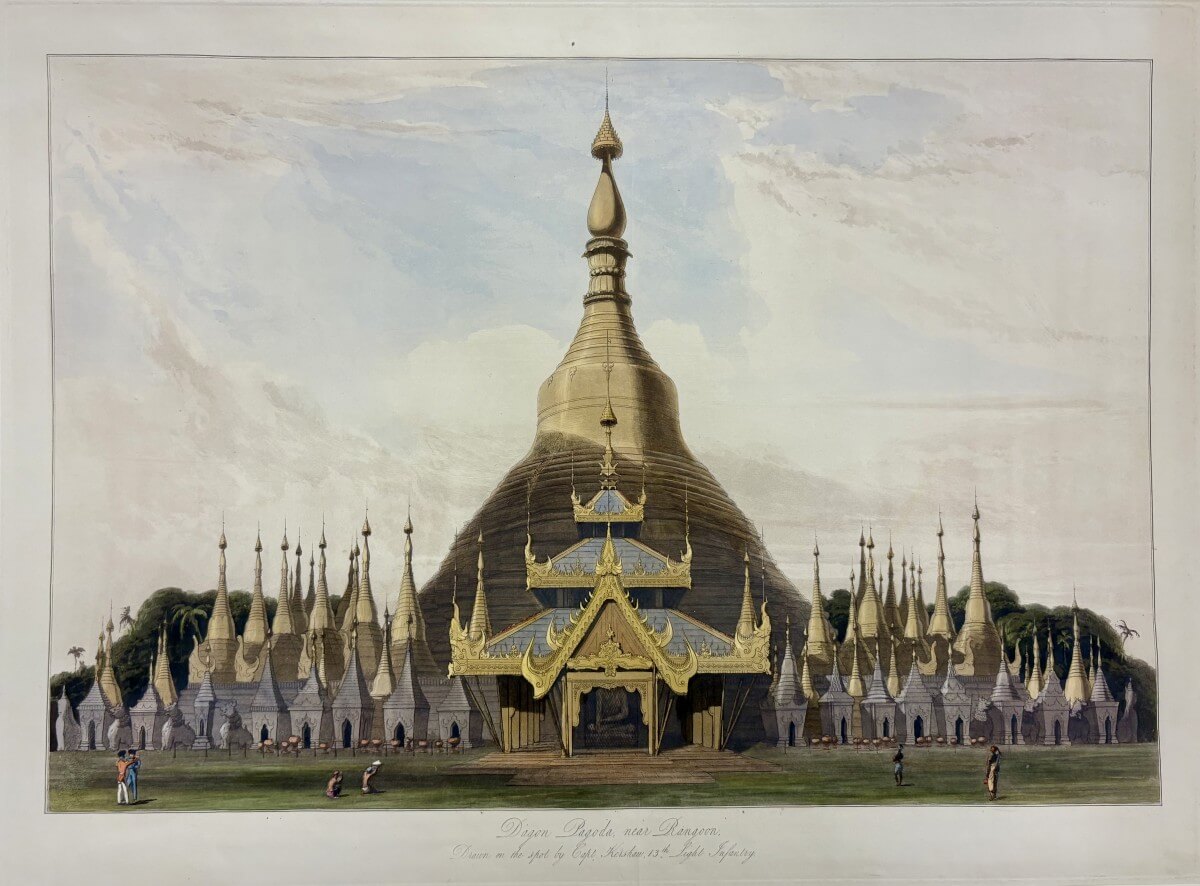
The first is a large‑format album entitled Views in the Burman Empire, published in London in 1831. It contains ten coloured engravings based on paintings of Burma by Captain James Kershaw. The catalogue for the album can be found here.
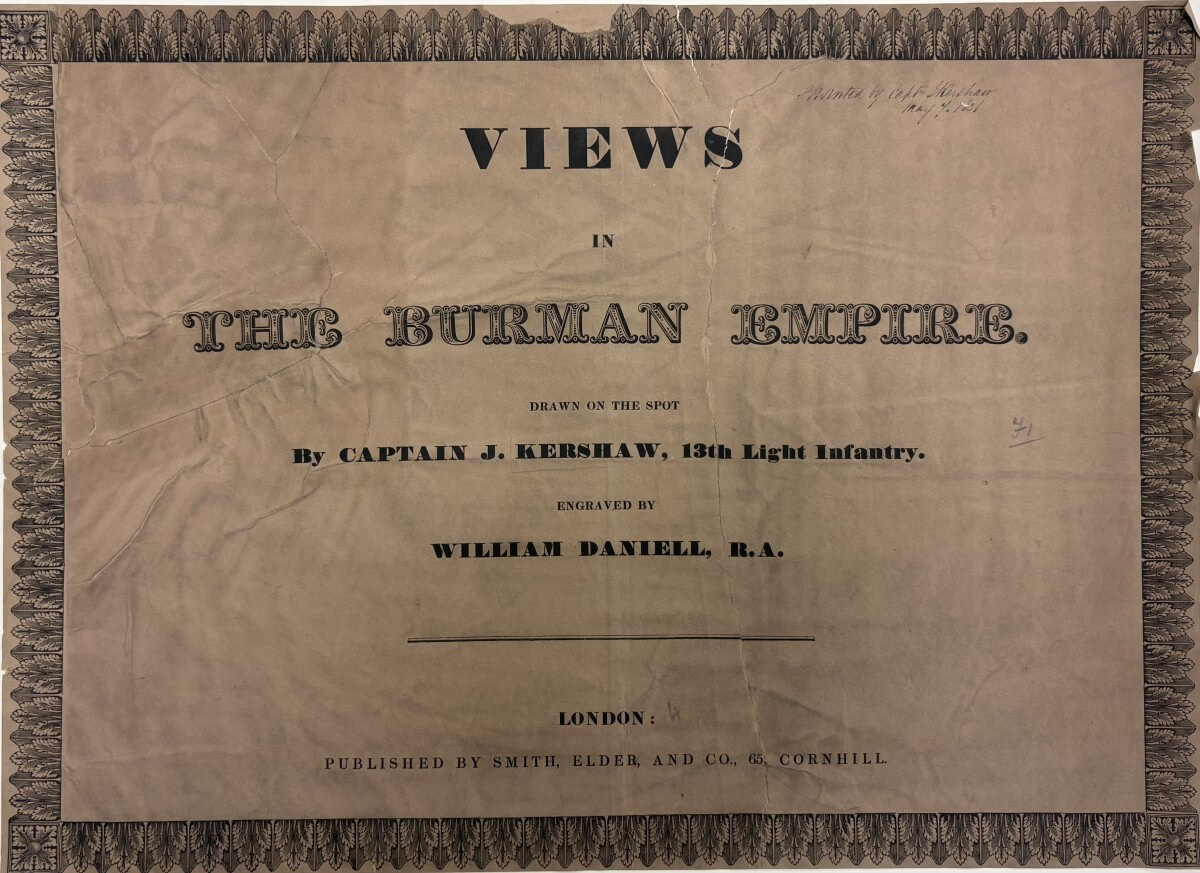
Our copy no longer survives as a bound album. At some point in its history, the engravings were removed and mounted individually – a change that, while altering the original format, makes them slightly more accessible today. The album was presented to the Society by Kershaw himself, on 7 May 1831.
Little is known about Kershaw’s life, but what we do know is that he held the rank of Captain in the 13th Regiment of Foot and served in the First Anglo-Burmese War (1824–26), creating these drawings ‘on the spot’, as stated on the cover of the album. The London Gazette on 13 December 1839 records his promotion to Major in July 1839, and he probably died soon after that while serving in the First Anglo‑Afghan War (1839–42).
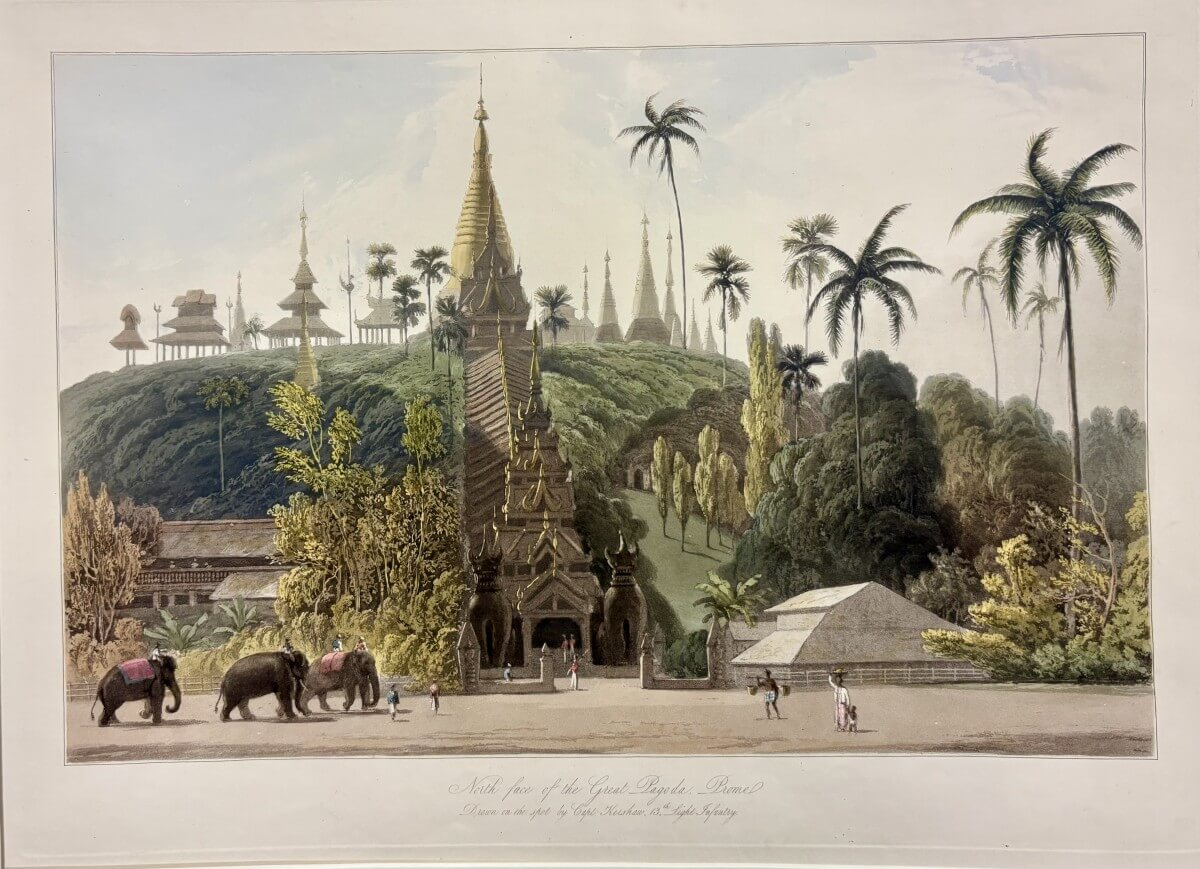
The engravings themselves are of exceptional quality, hand‑aquatinted by the artist William Daniell, who – together with his uncle Thomas Daniell – was celebrated for picturesque views of India and jointly designed the Society’s iconic elephant emblem. Kershaw’s selection of subject is entirely topographical and architectural, often featuring the grand structures. Half of the album’s plates depict pagodas or views from pagodas, particularly in Rangoon (Yangon) and Prome (Pyay). Thanks to Daniell’s mastery of tonal aquatint, the images are not only technically accomplished but also deeply atmospheric. They present a highly picturesque – some might even argue romanticised – vision of the Burman Empire, especially poignant given the turbulent aftermath of war.
In coincidence, we’ve also brought online the catalogue for the Unwin collection, which includes over 60 watercolours and drawings of Burma, India and Egypt created by Arthur Hamilton Unwin and his wife, Frances, in the late 19th century.
Similarly, not much is known about Arthur Hamilton Unwin, but we know that he was accepted into the Indian Civil Service in 1867. He was soon appointed Third Assistant Collector and Magistrate of Poona, Bombay Civil Service in 1869, later serving as an inspector of schools in Burma. He retired to England in 1896, and probate records suggest that he died in Carlisle in August 1912. The collection was donated to the Society by their daughter, Beryl Unwin, in 1968.
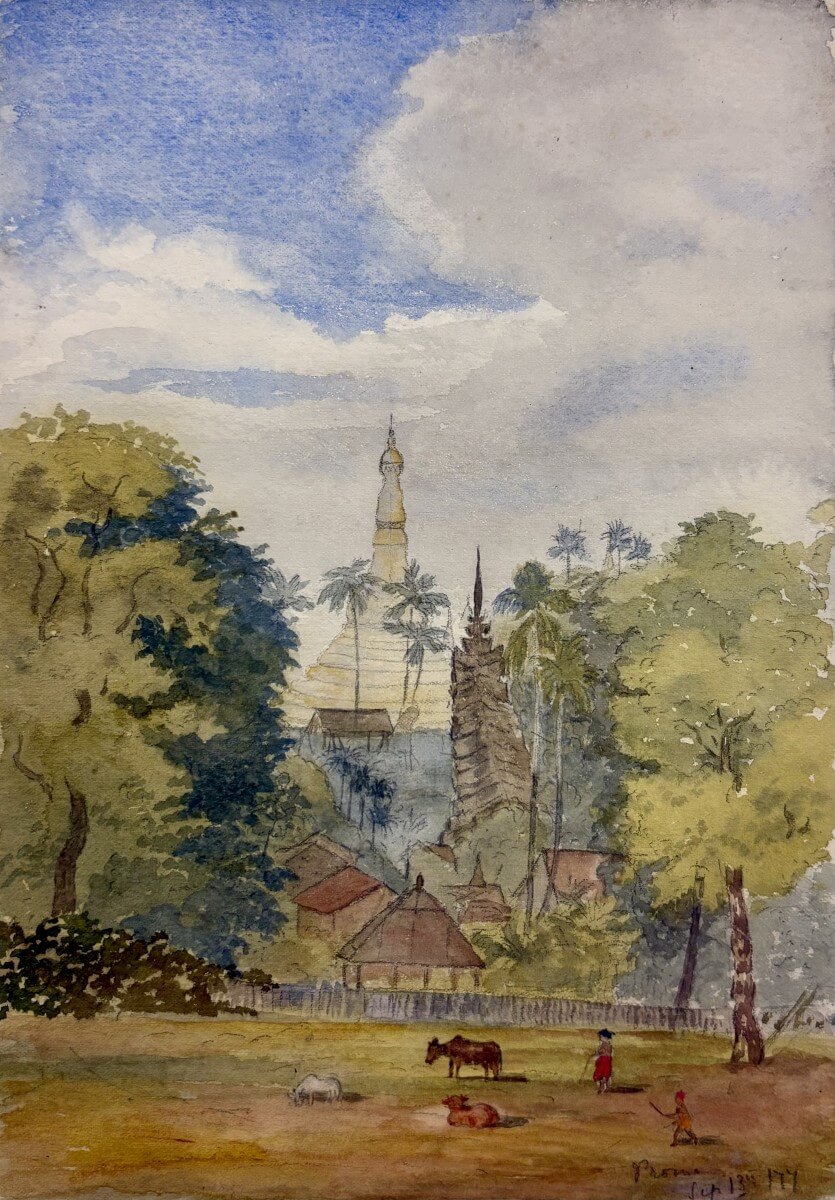
The artworks themselves reveal much about the couple’s interests. Their gaze was drawn less to monumental architecture but more to the rural life: landscapes, villages, animals, peasants, mountain huts and quiet paths winding into the woods. The Prome Pagoda appears here too, though in a markedly different way than in Kershaw’s depictions. Instead of dominating the scene, it sits gently in the background of an open field where two children graze animals – a pastoral counterpoint to Kershaw’s grand, architectural focus.
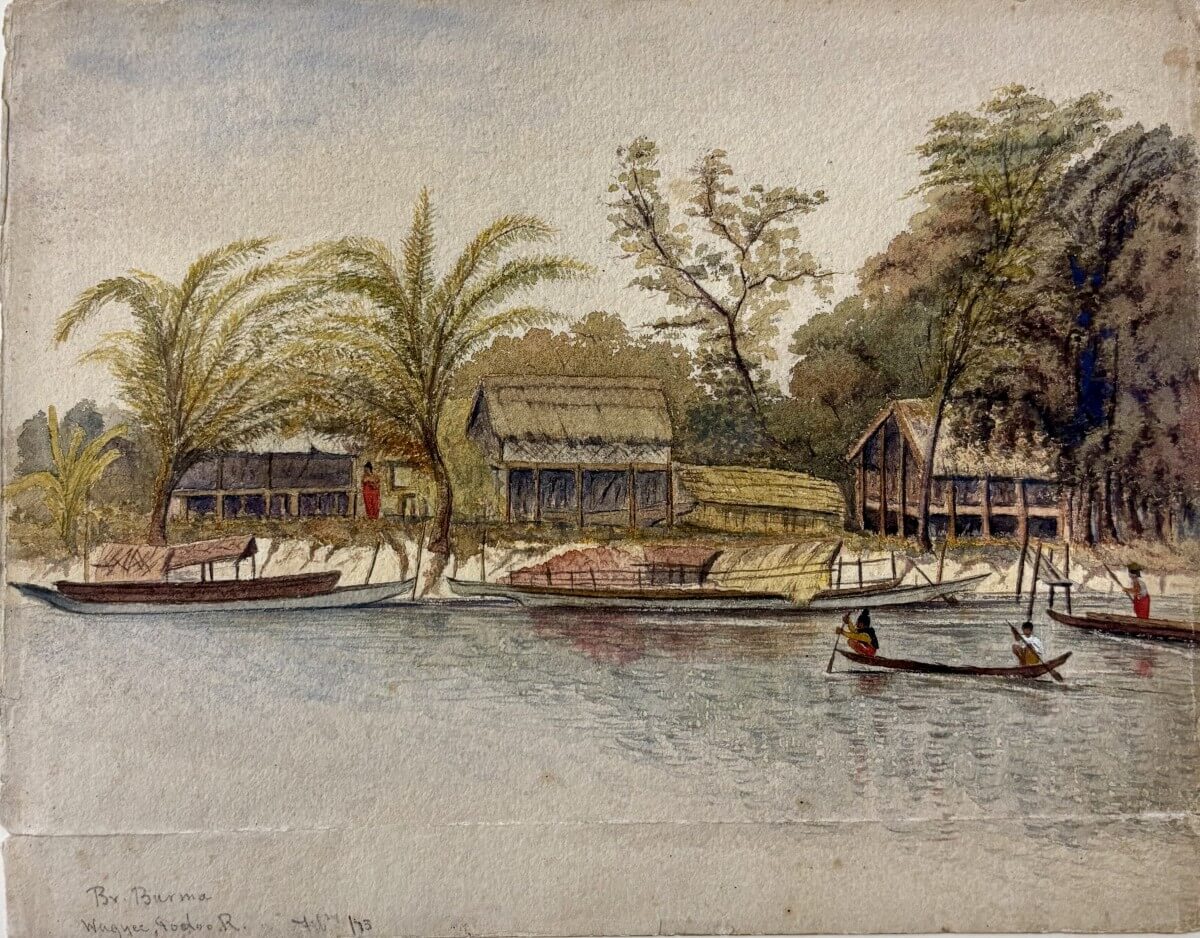
There are also several still life paintings within the collection by Frances Unwin, including mostly watercolours of flowers dating to 1894. During this time, she likely studied painting under a teacher, who apparently made some comments at the back of most of her drawings.
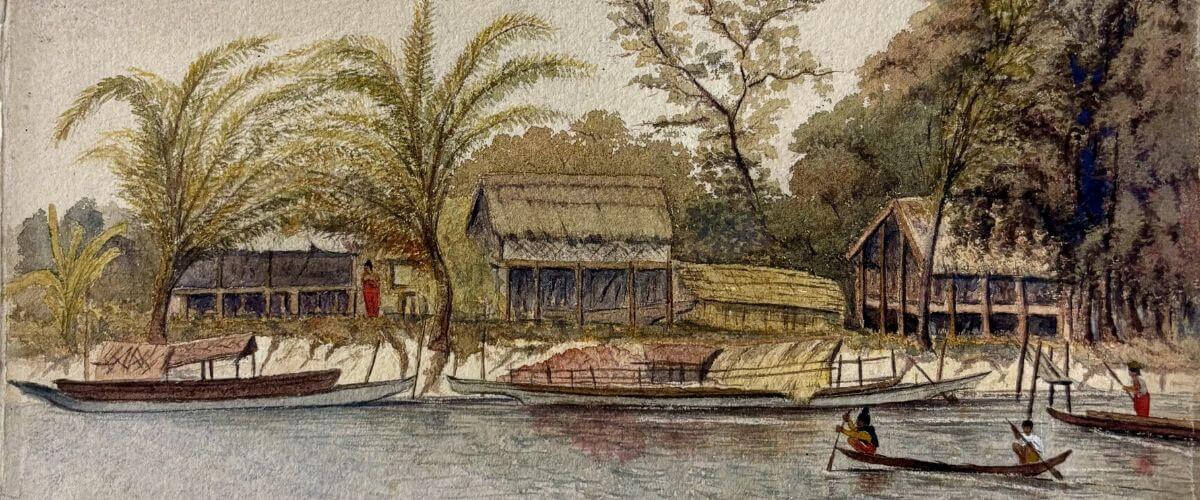
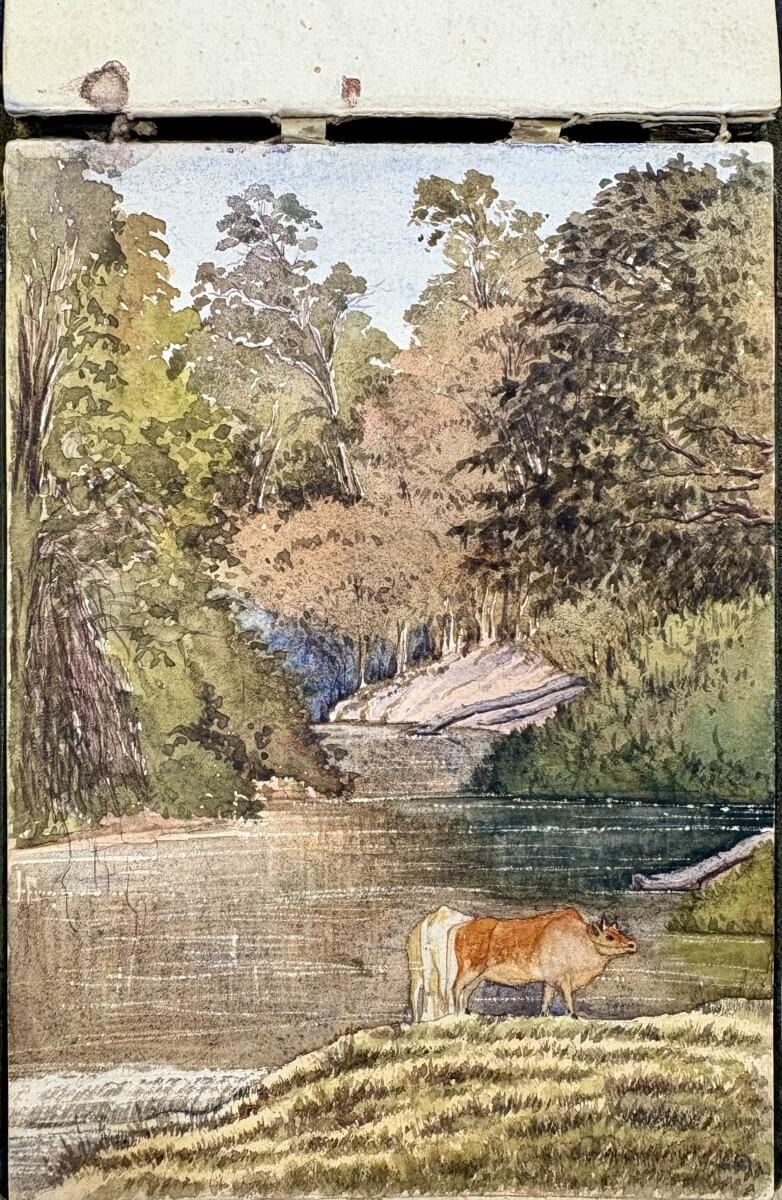
Also found within this collection is a small sketchbook, dating from 1875 to 1876, filled with Arthur’s drawings and watercolours of Rangoon, Shwegyin and surrounding districts in Burma. These works radiate a painterly tranquillity, echoing the picturesque qualities of Kershaw and Daniell yet with a softer, more intimate touch. Some drawings bear pencil inscriptions at the back identifying the location at which it was painted and the date, such as this one, at [Tandagyee] Jungle, Shwegyin District, 5 February 1876:
We are hoping to add the digitised Unwin collection to our Digital Library in due course so that these can be viewed online, but until then the whole of the collection can be discovered in our Library catalogue here. If you are interested in seeing these in-person, let us know!
James Liu