
James J. Busuttil Prize For Human Rights Prize Lecture
Yesterday evening, the Society hosted the prize-winner lecture for its inaugural James J. Busuttil Prize and Medal for Human Rights. This award, generously offered by Dr James Busuttil, an activist, author, academic and NGO leader in human rights, aims to promote research and publication in the field of human rights.
The 2025 prize was awarded to Dr Lydia Walker (Ohio State University) and Dr Sandhya Fuchs (University of Bristol). For the occasion, Dr Fuchs delivered a compelling lecture based on her award-winning publication, Fragile Hope: Seeking Justice for Hate Crimes in India.
The Society’s President, Dr Norbert Peabody, began the event by reflecting on the origins of the prize. He expressed heartfelt gratitude to Dr Busuttil for his generosity, which has inspired the Society to engage more deeply with the discussions of human rights – an area not traditionally within its remit, yet profoundly relevant to contemporary society. Following this, Professor Alpa Shah, Statutory Professor of Social Anthropology at the University of Oxford and also PhD supervisor to Dr Fuchs, introduced Dr Fuchs’s research and highlighted its significance.
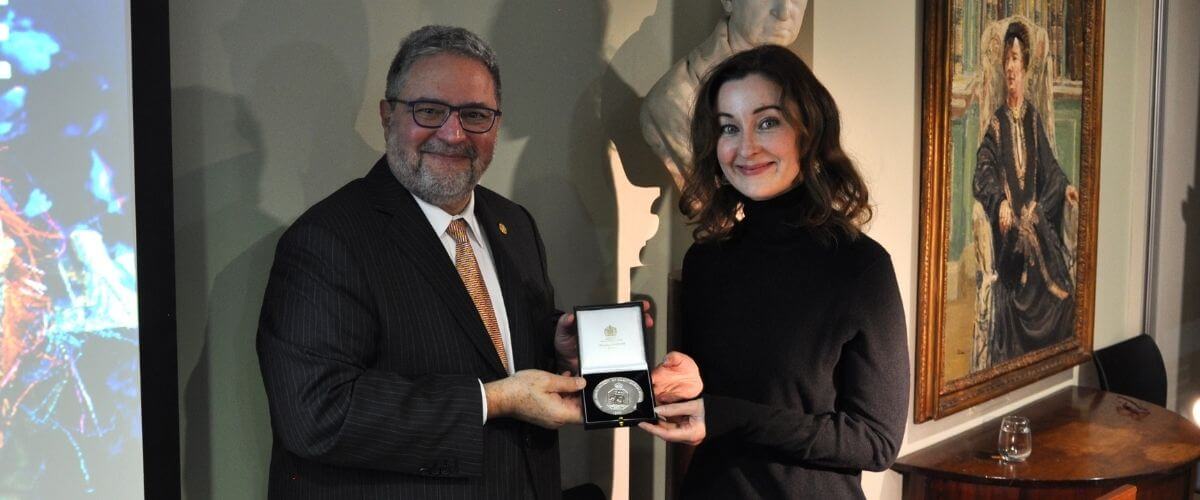
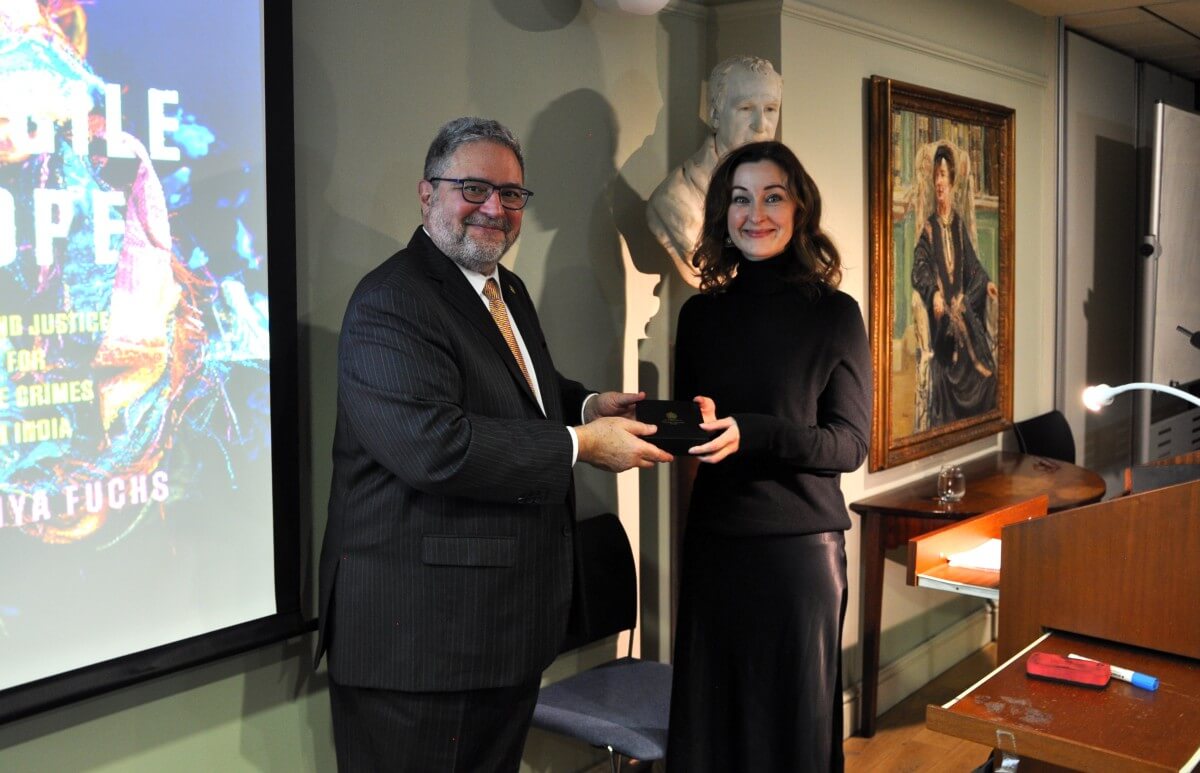
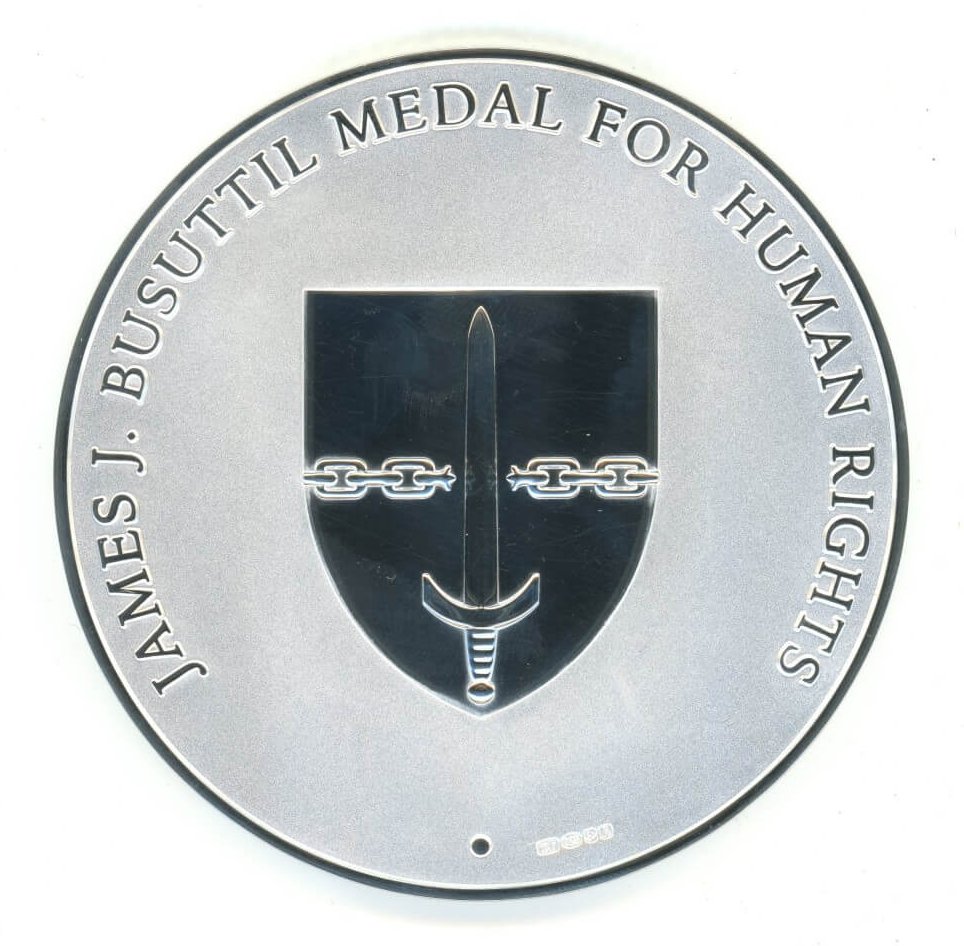
Amid warm applause, Dr James Busuttil himself presented the prize medal to Dr Fuchs. The medal bears the Society’s elephant emblem on one side, while the other shows Dr Busuttil’s coat of arms depicting a sword breaking through chains, a vivid symbol of resistance against oppression.
Dr Fuchs opened her lecture with the moving story of a Meghwal woman, a survivor of caste atrocity. Between 2016 and 2018, she conducted 18 months of ethnographic research in Rajasthan, India, documenting the lived experiences of Dalit communities, those historically considered the lowest caste in the caste system, who continue to face hate crimes and caste-based violence. Her work involved close engagement with survivors of atrocity, their families, activists, NGOs, police officers and members of the judiciary, tracing how they navigate the pursuit of justice.
Dr Fuchs’s findings reveal the complex and contested nature of atrocity cases, often becoming battlefields where competing motivations and interpretations collide. She posed critical questions: More than three decades after the introduction of India’s only hate crime law – the 1989 Scheduled Castes/Scheduled Tribes Prevention of Atrocities Act – how successful has it been? How should success be measured, and for whom? She also observed that Dalit communities and NGOs have developed networks of learning and advocacy – sharing legal knowledge, building capacity and exchanging information. This collective effort fosters what she calls a meliorist hope complex: the powerful belief that meaningful justice can emerge through sustained engagement with the law.
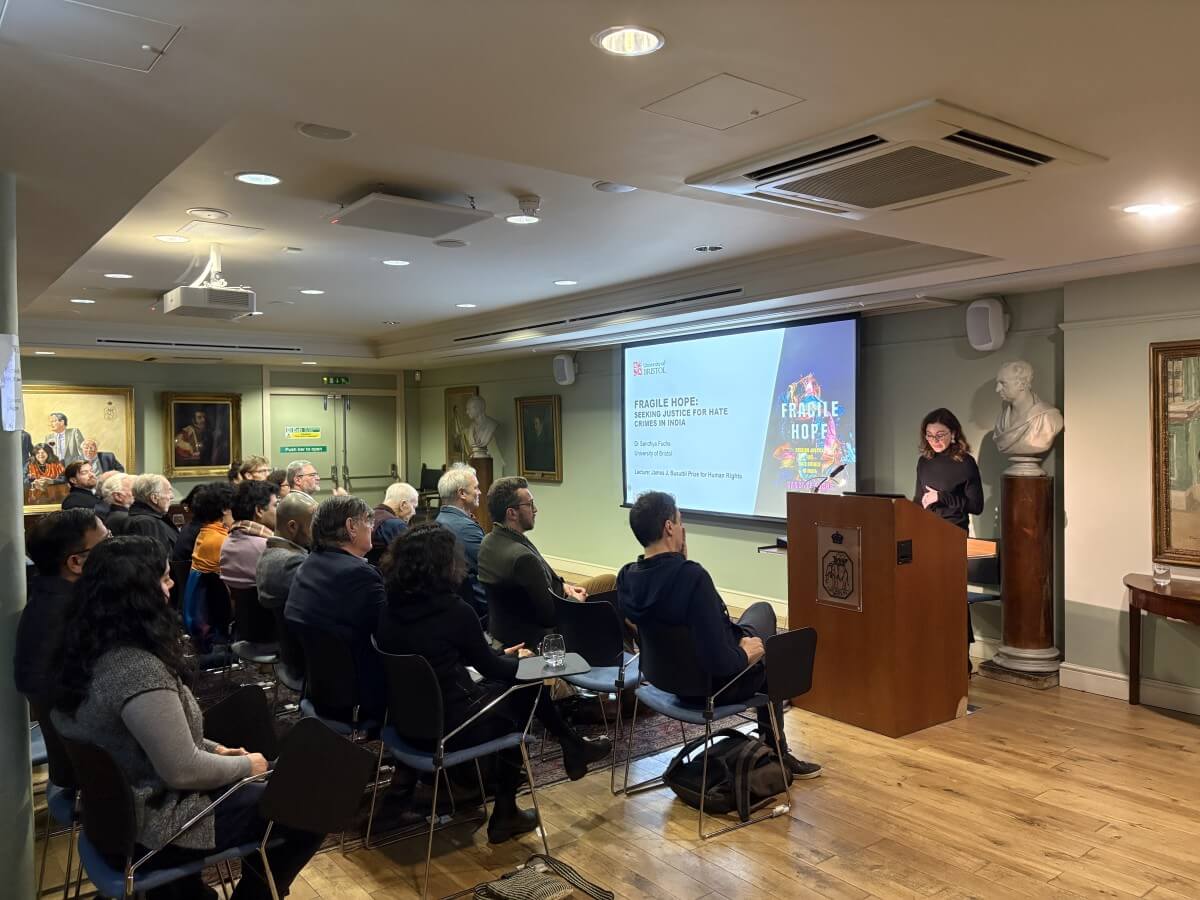
We extend our warmest congratulations to Dr Fuchs for her remarkable contributions to human rights scholarship. The lecture hall was packed with the Society’s friends and other members of the public, so thank you all for coming! If you are interested in Dr Fuchs’s research, her book is available for purchase via the Stanford University Press here. A recording of the lecture will also be uploaded to our YouTube channel soon.
Finally, a reminder: nominations for the 2026 James J. Busuttil Prize and Medal for Human Rights are now open until 31 March 2026. We look forward to recognising more outstanding research and continuing the vital conversation on human rights within the scholarly community. So please do get your applications in or share the news with anyone who might be interested!
More information about the award can be found here: https://royalasiaticsociety.org/the-james-j-busuttil-medal-and-prize-for-human-rights
James Liu