
- This event has passed.
Prof. Peter Clift – Societal Development in Asia and its links to Evolving Climate and Rivers
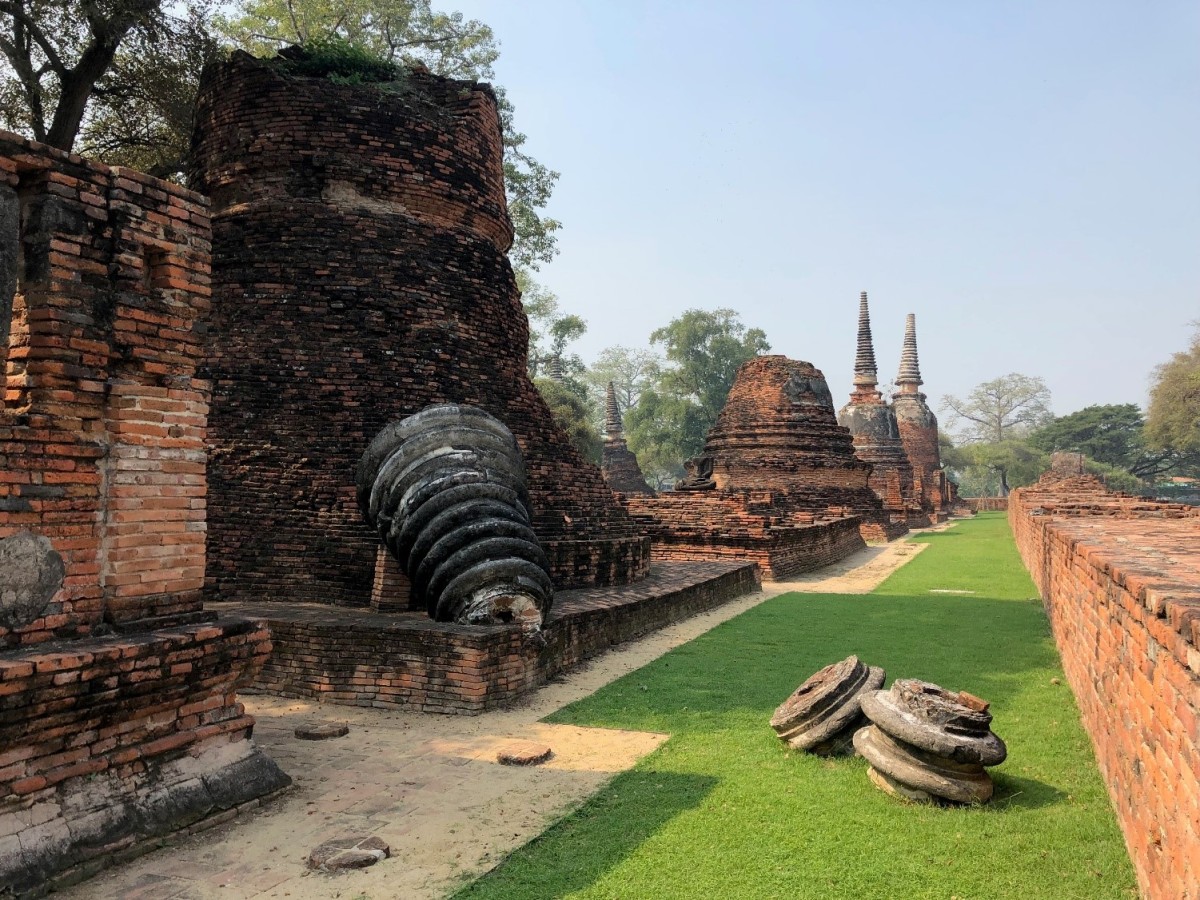
The strength of the Asian monsoon has varied over timescales spanning millions to thousands of years and even decades. Climate records stored in lakes, caves and marine sediments now allow its reconstruction with unprecedented precision. Since around 10,000 years ago changes in monsoon intensity have impacted the development and then demise of civilisations across Asia especially those located on the edge of the monsoon system. The Indus Valley Civilization is a good example of a culture that developed when the monsoon was stronger, then responded to the slowly drying climate before eventually dissipating, leading to the abandonment of their cities. It is largely through agriculture that the monsoon control is recognised. Other examples of societal crises brought on by climate change include Angkor Wat but also the Ming and Song dynasties in China. Strong monsoons appear to have allowed the Mongol conquest of Eurasia in the 13th century. Future warming of the climate is expected to result in stronger monsoons but also more stormy conditions which are also not connected to productive agriculture. Some areas like northern China are predicted to become drier. The monsoons furthermore fuel the large rivers of Asia which have been critical to the development of major urban centres across the continent in the historical and prehistorical past. Climate changes also affecting the track of typhoons in the Western Pacific with fewer going into the South China Sea and towards Vietnam and more moving to the north-east towards central China and Japan. The future prosperity of Asia is also threatened by rising sea levels, particularly in southeast Asia and eastern China. Understanding how people adjusted to claim a change in the historical and archaeological past is important for developing effective strategies for dealing with current and future changes.
Peter Clift has been a professor in the Department of Earth sciences at University College London since 2023. He previously worked at a variety of institutes in the US and the UK and has been a sabbatical or visiting researcher in India and China. He has been a visiting professor at the Chinese Academy of Sciences, South China Sea Institute for Oceanology for 20 years. Clift did his BA at the University of Oxford and a PhD at the University of Edinburgh. He is most well known for his work on the origin and development of the Asian monsoon and has used sediments preserved in the seas around Asia to look at the evolution of landscape with the impact of climate change and human settlement being of particular focus. He has a special interest in the Indus Valley Civilisation and the interactions of the Indus river and Thar Desert system with the human history of South Asia. Clift is a fellow of the American Geophysical Union as well as the Geological Society of America and in 2023 he was awarded the Lyell medal by the Geological Society of London. In 2024 he was Jubilee Chair Professor at the Indian Academy of Sciences and this year holds a Chinese Academy of Science President’s International Fellowship.
Free and open to all at 14 Stephenson Way, NW1 2HD
To join us online email: mb@royalasiaticsociety.org