
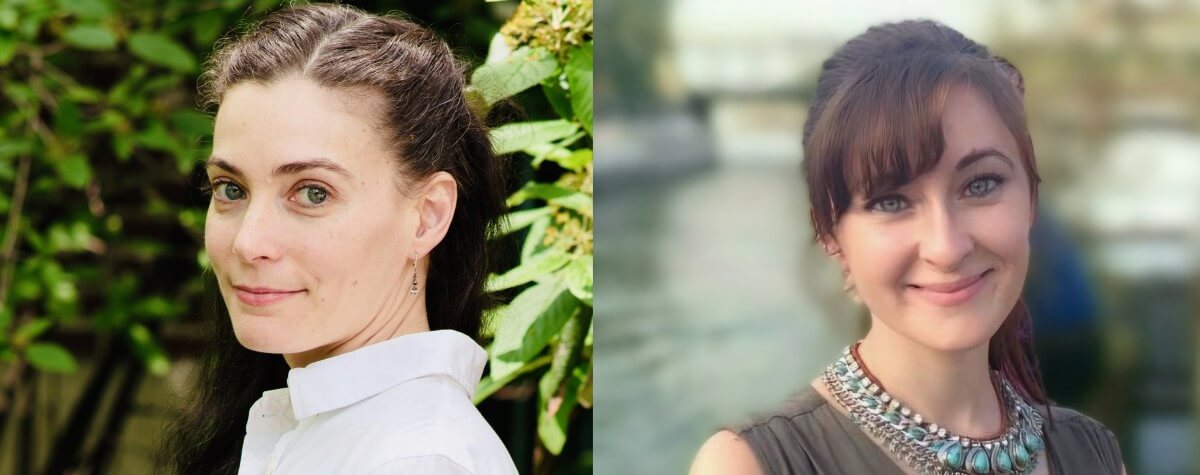
The James J. Busuttil Medal and Prize for Human Rights – Winners Announced
The Royal Asiatic Society is pleased to award the 2025 James J. Busuttil Prize and Medal for Human Rights jointly to Dr Lydia Walker for States-in-Waiting: A Counternarrative of Global Decolonization (Cambridge University Press, 2024) and Dr Sandhya Fuchs for Fragile Hope: Seeking Justice for Hate Crimes in India, (Stanford University Press, 2024).
Both books are exemplary works of early career scholarship – original, rigorous, and engagingly written. Though very different in scope and method, each makes a distinctive and compelling contribution to the study of human rights.
Lydia Walker’s States-in-Waiting is a wide-ranging and ambitious global history of nationalist movements that sought sovereignty but fell outside the formal decolonization framework of the mid-twentieth century. Drawing on under-utilised archives, Walker reconstructs the history of claimants such as the Naga independence movement, showing how their aspirations were mediated by international legal and humanitarian advocates who operated outside official diplomatic channels. Walker reveals how human rights concerns emerged where sovereignty claims were denied, offering a powerful counternarrative to conventional histories of decolonization.
Sandhya Fuchs’ Fragile Hope is a sensitive ethnographic study of Dalit communities in Rajasthan and their engagement with the 1989 Scheduled Castes and Scheduled Tribes (Prevention of Atrocities) Act, India’s only hate crime law. Based on extensive fieldwork, Fuchs explores how survivors, human rights activists, police, and legal institutions interact in the pursuit of justice. The book offers profound insight into the promises and limitations of human rights frameworks, revealing how advocacy can both empower and marginalize, particularly along gendered lines.
Each Prize winner will deliver a lecture at the Royal Asiatic Society in the coming months.
The judging panel warmly congratulates Dr Walker and Dr Fuchs on their outstanding contributions.
We have included below two short pieces written by the winners about their books and their current research.
Winner – Dr Lydia Walker
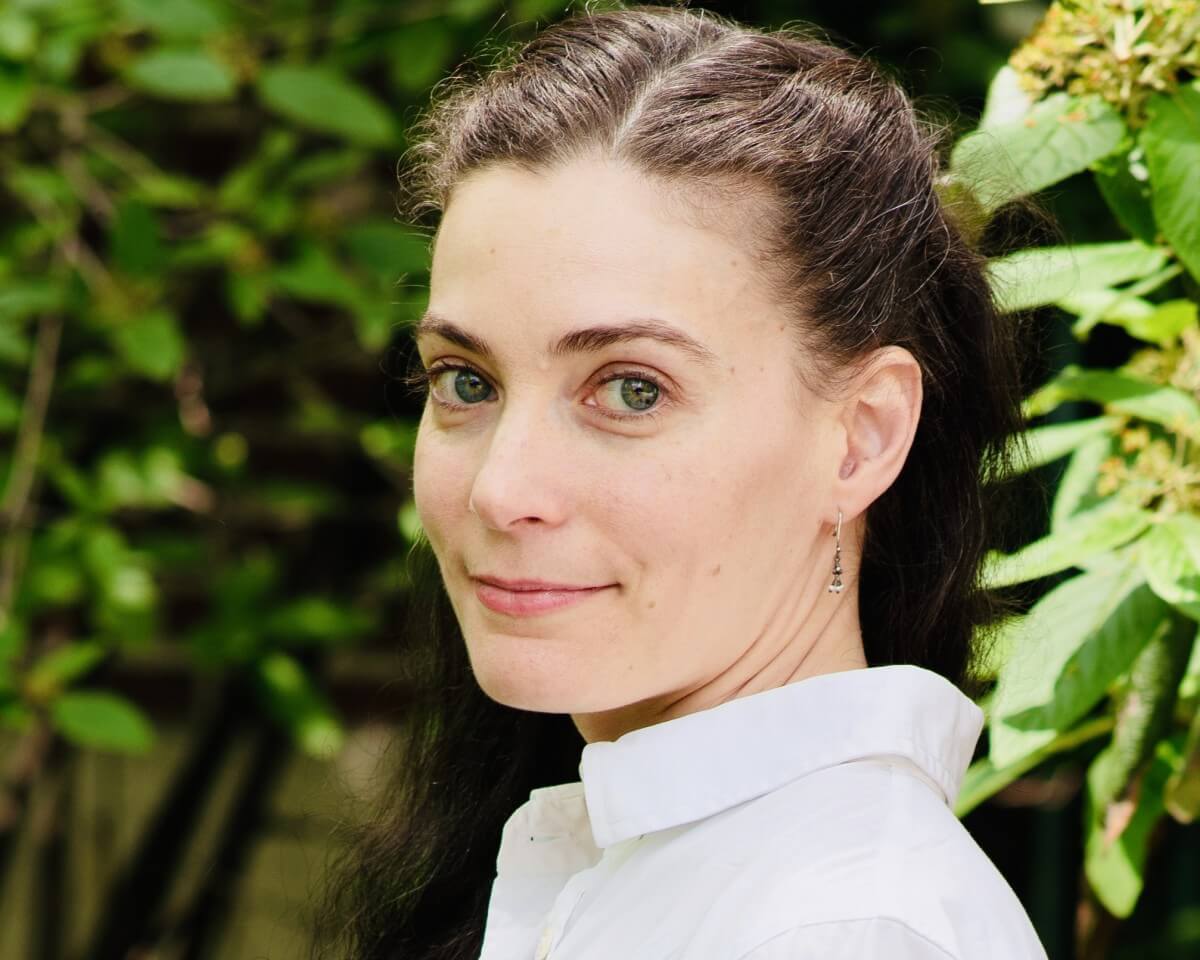
Lydia Walker’s book States-in-Waiting (Cambridge, 2024) offers a counternarrative of global decolonization after the Second World War, when national self-determination became a recognized international norm, yet it one that effectively only extended to former colonies. Highlighting little-known regions, marginalized individuals, and their hidden or lost archives, this history begins and ends in Nagaland at the junction of China, Burma, and India, a region that was invaded by the Second World War and declared independence the day before Indian independence in August 1947. After years of resistance to Indian rule, the Naga nationalist leader Angami Zapu Phizo arrived in London in 1960, the same year that seventeen countries became independent world-wide and national self-determination became an international norm at the United Nations.
However, that international-legal conception did not apply to peoples within postcolonial states. Therefore, Nagas like many other nationalist and humanitarian claimants relied on unofficial advocates to attempt to access international forums. Yet these advocates drawn from global human rights movements had their own agendas and allegiances, which could undermine the autonomy of the claimants they supported. By foregrounding nationalist movements and their transnational advocacy networks, States-in-Waiting articulates how particular nationalist claims were transformed into human rights concerns when they did not fit postcolonial notions of state sovereignty. In this way, the book illuminates the un-endings of decolonization—the unfinished and improvised ways that the state-centric international system replaced empire, which left certain peoples perpetually awaiting recognition.
Walker is Provost Scholar Assistant Professor and Seth Andre Myers Chair in Global Military History at The Ohio State University, USA. In 2025, she is also a visiting fellow at Magdalene College, Cambridge, UK. Her current research focuses on the history of international intervention in postwar conflict zones through the evolving role of the United Nations.
States-in-Waiting was published Open Access through a TOME (Toward an Open Monograph Ecosystem) grant awarded by Ohio State Libraries in collaboration with the Association of American Universities, Association of Research Libraries, and Association of University Presses.
Winner – Dr Sandhya Fuchs
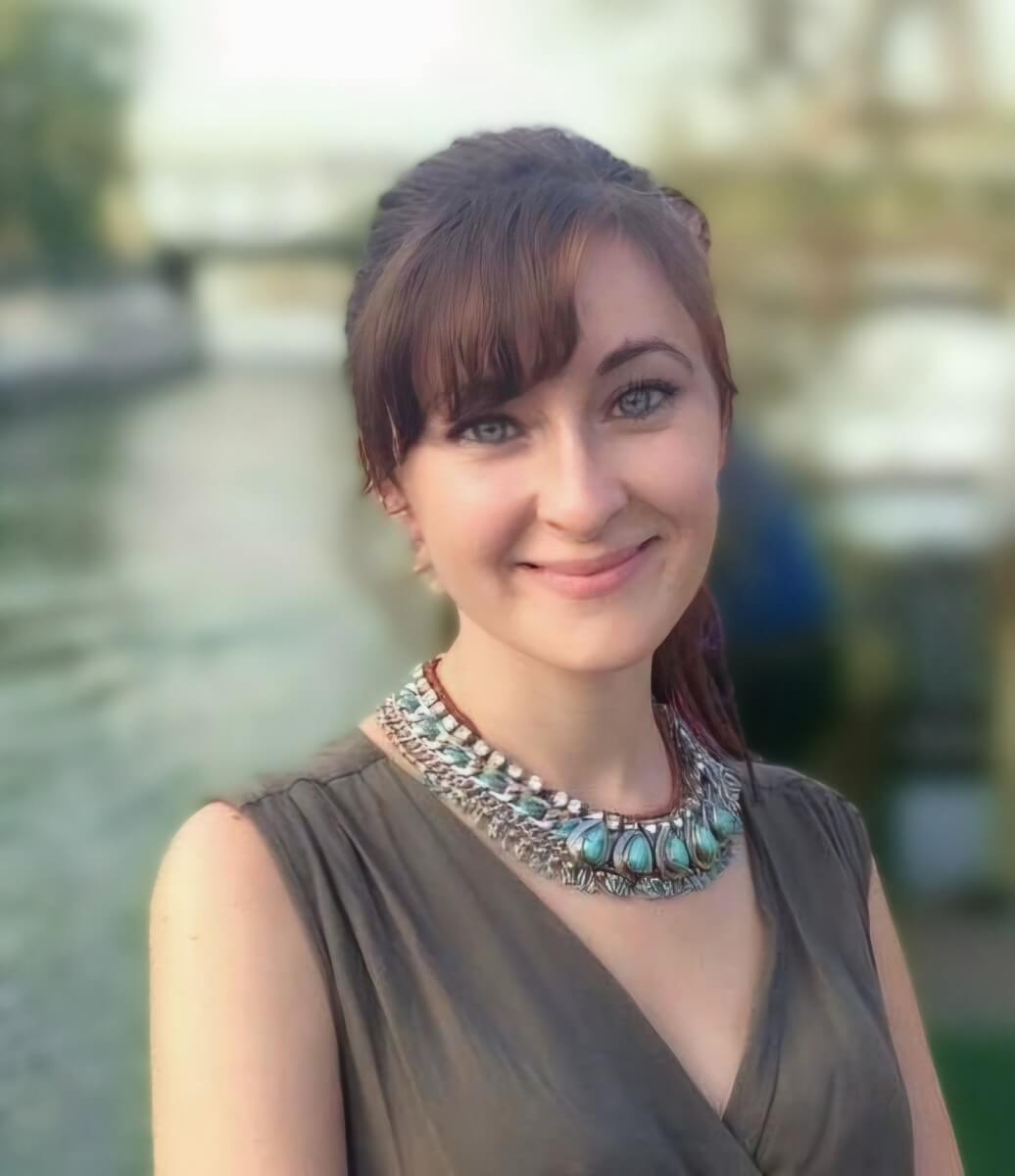
I am an anthropologist of law, violence and politics. My research ethnographically explores what role law – conceptualised broadly as the realm of human, institutional and digital action that creates meanings and normative systems of justice – plays in challenging political and historical narratives of discrimination, and in supporting the rights, hopes and transformative aspirations of historically marginalised groups. Centrally, my work has focused on identity-based violence – or what we colloquially call hate crimes and hate speech – in India and more recently also the Indian diaspora.
My first book, Fragile Hope, offers a unique glimpse into the mutually constitutive relationship between human rights regimes and the social life of hate crime law in India. It explores how human rights infrastructures shape the implementation of India’s only hate crime law – the 1989 Scheduled Castes/Scheduled Tribes Prevention of Atrocities Act (PoA). The PoA aims to protect Dalits (caste groups who are still considered ‘untouchable’ by many within the Hindu caste hierarchy even though India’s constitution abolished the practice of untouchability in 1950) and Adivasi indigenous communities from targeted violence by upper castes. Fragile Hope draws on eighteen months of multi-sited ethnographic fieldwork with Dalit survivors of caste atrocities, human rights activists, police, and courts in the North Indian state of Rajasthan between 2016 and 2018 to trace how Dalit communities experience, navigate and mobilise the Atrocities Act. Through the lens of intimate ethnographic narratives, the book shows how Dalit communities weave human rights work into criminal law to transform the social conditions of justice for historically marginalised groups.
Fragile Hope examines the relationship between hate crime law and human rights in three domains. First, the book also offers new, nuanced insights into how human rights activism can unintentionally exacerbate intersectional inequalities within historically marginalised groups in the South Asian context. Fragile Hope shows that while Dalit human rights NGOs play a key part in knowledge exchange, fact-finding, and the production of judicial interpretations in Indian hate crime cases, their approach often creates new gendered injuries that silence the voices of Dalit women, who have lived through hate crimes. This process sometimes enables new forms of intra-caste hierarchy.
Second, Fragile Hope focuses on the hitherto underexplored interaction between human rights activism and hate crime advocacy in the South Asian context. In particular, it analyses how the activities of human rights NGOs and India’s National Human Rights Commission (NHRC) allow Dalit hate crime survivors to find agency, compensation and restorative justice within a criminal justice system, whose policies and regulations have historically silenced their voices.
Finally, the book provides a longitudinal, collaborative exploration of the social life of human rights activism within the Indian criminal justice space through the lens of intimate storytelling. Fragile Hope was written in close conjunction with the Dalit survivors and human rights activists, whose voices feature prominently in the monograph. The book follows individual legal narratives to show how human rights-based interpretation of proper legal procedure are lived and resisted in the hate crime space; how human rights work harms and heals hate crime survivors, and how human rights expertise reproduces inequalities while engendering possibilities for social transformation.
After completing Fragile Hope I expanded my theoretical and empirical research on hate crime and human rights law in India through a Leverhulme Early Career Fellowship (2020-2024), which examined the role of courts in safeguarding social and religious equality by protecting fundamental constitutional rights. I conducted extensive institutional and urban ethnography at the Indian Supreme Court in Delhi to analyse how different ideas of Indian history and Indian belonging shape how judges interpret hate speech against Indian religious minorities and Dalits. This research, which I am currently writing up, revealed how politically produced modes of historical consciousness can actively form judicial interpretations of minority rights and protections.
Currently, I am extending my research agenda into the Indian diaspora to explore how digital worlds shape legal discourses and interpretations of minority rights, and how legal frameworks influence the social and political impact of the digital. With partners in in the UK. South Africa and the USA. I am developing a research project that combines ethnographic research with computational methods to better understand how hate speech against Indian religious minorities travels into the diaspora via social media and is translated into physical violence outside India. The project asks which legal, historical and cultural factors facilitate the transformation of online hate into ethnic and religious tensions in the diaspora. Moreover, it explores how digital language interacts with local legal and cultural histories to enable the transnational cross-fertilization of, authoritarian and discriminatory ideas and narratives.
In other news, the Society hosted a lecture yesterday evening (26 June) on the Torrijos ceiling currently on view in the new V&A East Storehouse in London. This magnificent ceiling, datable to the late 15th century, once adorned a palace in the town of Torrijos in central Spain, and is telling of the taste for Islamic styles during the medieval Spain. The lecture was delivered by Dr Anna McSweeney, lecturer at Trinity College Dublin, and V&A curator Dr Mariam Rosser-Owen, who have been conducting research into theceiling and contributed to its redisplay in V&A after it went into storage for more than three decades. What was particularly fascinating to see in their presentation was some behind-the-scenes images and videos depicting the inspection, conservation and installation processes that went into the redisplay project. If you are interested in the work by their research group, read more in this blogpost and follow them on Instagram.
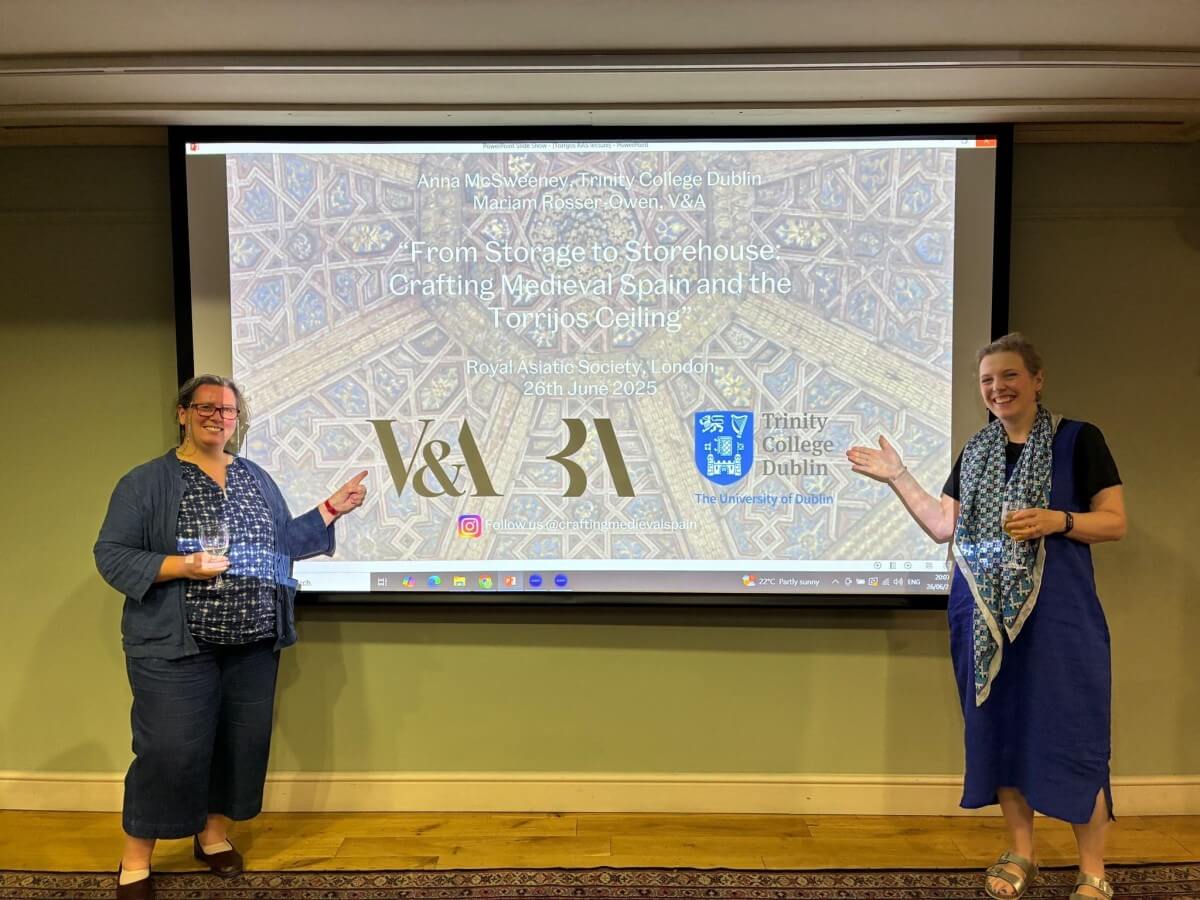
Recording of the lecture will be made available in due course on our YouTube channel – subscribe to our channel so you won’t miss new updates from us!
This also marks the end of our 2024/25 Lecture Series. Over the past year we had the privilege of hosting many interesting lectures, book talks and events on a multitude of themes and topics. We are grateful to all our speakers and to everyone who joined us physically and virtually. Our lecture programme is taking a short break over the summer and will return in September with a new series, so watch this space!