Winner of 2025 James J. Busuttil Prize announced
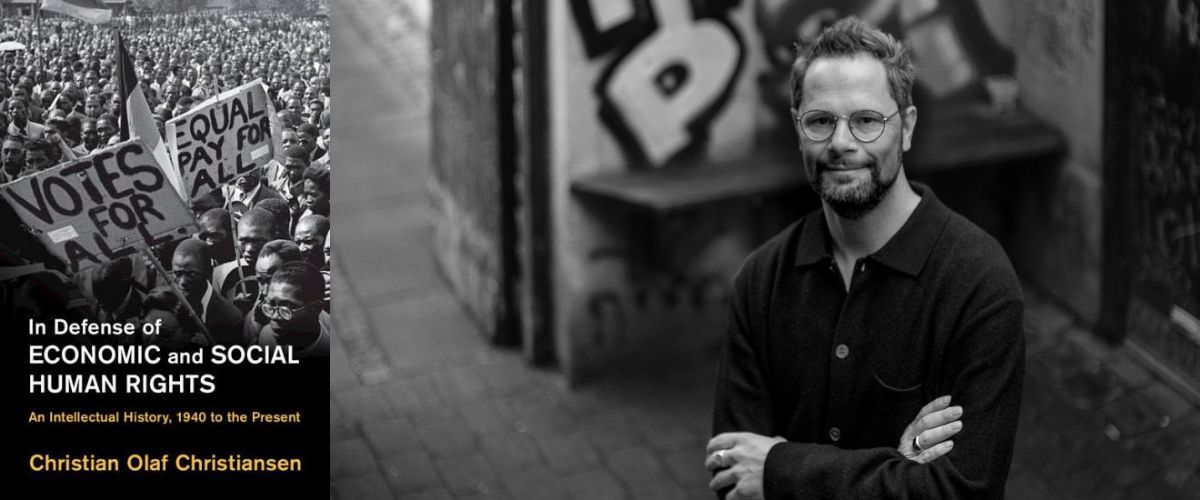
The Royal Asiatic Society is delighted to award the 2025 James J. Busuttil Prize and Medal for Human Rights to Professor Christian O. Christiansen for his book In Defense of Economic & Social Human Rights: An Intellectual History, 1940 to the Present (Cambridge University Press, 2025). The Society would like to thank the judges for their deliberations and participation and the other nominees for their submissions, which were greatly appreciated.
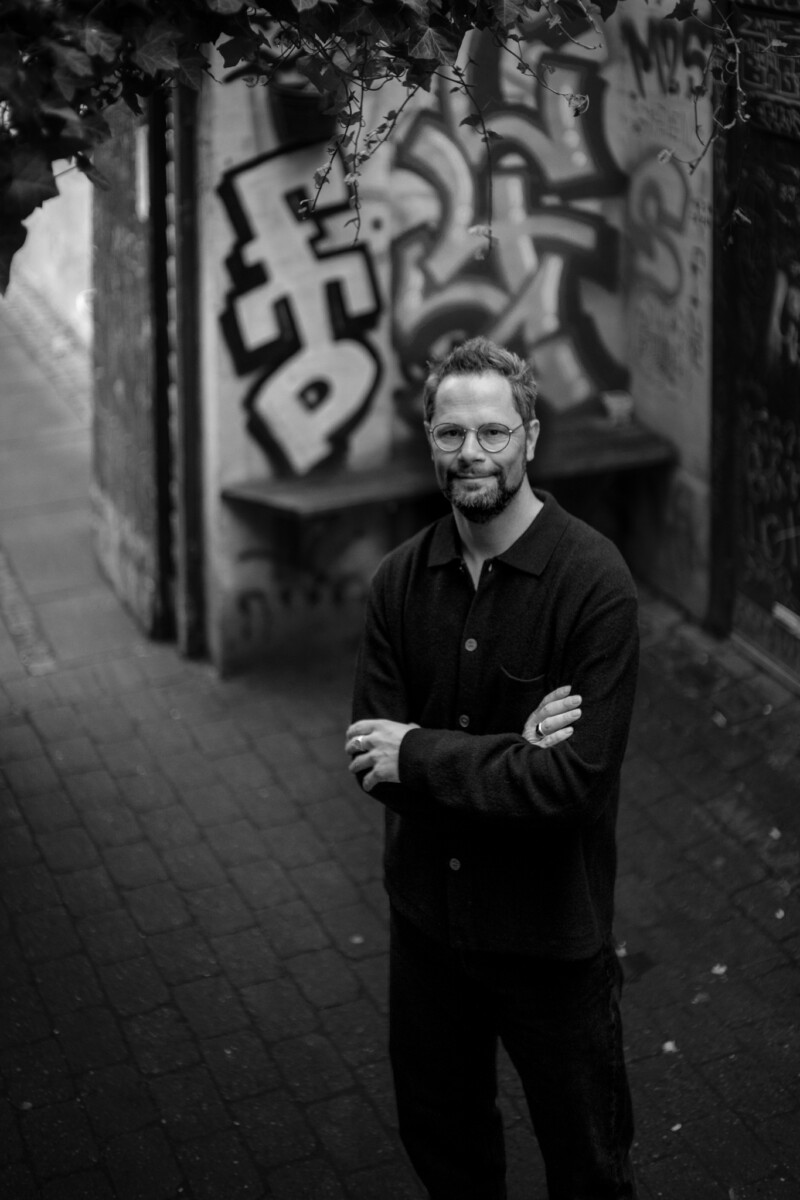
Christian Olaf Christiansen is a full Professor of Intellectual History at Aarhus University, Denmark. His research brings historical perspective to urgent issues like global inequality, international social and economic human rights, development and the role of business in society. In recent years, he has shifted focus from a Western viewpoint to a more global history of ideas. He has twice received Denmark’s Sapere Aude grant, held a Carlsberg Foundation Monograph Fellowship, been a visiting fellow in the US and India, and he was the principal investigator of the project ‘An Intellectual History of Global inequality’. His work has been acclaimed in the 2019 UN Human Development Report and by leading economists.
Christian is the author of many articles and books, including the monographs Progressive Business: An Intellectual History of the Role of Business in American Society (Oxford University Press, 2015), In Defense of Economic and Social Human Rights: An Intellectual History, 1940 to the Present (Cambridge University Press, 2025) and Designing Global Economic Equality: The Making and Unmaking of Global Egalitarian Politics at the United Nations (Oxford University Press, 2026). He is a frequent contributor to science communication and public debate. Most recently, he has been exploring new avenues of research on global justice and duties, alongside interdisciplinary approaches that bring research on the pressing questions of our time into dialogue with intellectual-historical research into their histories.
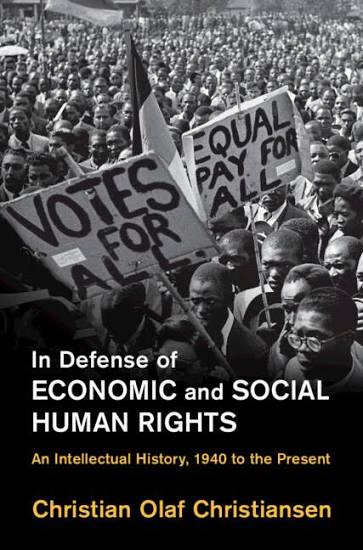
Christian Olaf Christiansen’s In Defense of Economic and Social Human Rights: An Intellectual History, 1940 to the Present stands out in the crowded field of human rights law literature due to the innovative approach taken in the book and its incisive and insightful analysis of how economic and social rights form an essential part of the international human rights project. The book demonstrates that questions of poverty, inequality, welfare and social justice have long been central to the pursuit of human dignity, and that economic and social rights are neither a recent invention nor a utopian aspiration but grounded in the efforts to make human rights relevant to the people in their daily lives. The book articulates through a historical lens that economic and social rights have long been advocated by many as the tools necessary for building a more just society.
The text looks beyond western thinking and provides a global perspective and historical and geographical context that go beyond a conventional Eurocentric focus. Christiansen provides a sweeping, three-phase mapping of how economic and social rights have been justified and linked to redistributive justice since World War II. By examining a diverse spectrum of global advocates—ranging from political scientists to Popes and crucially highlighting often-overlooked Global South actors—Christiansen bridges the gap between political philosophy and global inequality studies to illustrate how these rights frameworks have been actively mobilized against systemic wealth disparities. He brings discussions of economic and social rights fundamentally to the centre of human rights.
~~~
In other news, we had a busy week at the Society, with two events taking place over three days.
On Tuesday and Wednesday, we hosted our Aurel Stein conference, which explored both ongoing and emerging research on the Stein collections in the UK and beyond. The conference was well attended by scholars, researchers, and students, and it was exciting to learn about current research initiatives and fresh perspectives on Stein’s travels and discoveries more than a century after they took place. It was particularly encouraging to hear that work is underway to update The Handbook to the Collections of Sir Aurel Stein in the UK, first published in 1999, to keep its content up-to-date and relevant to the research community.
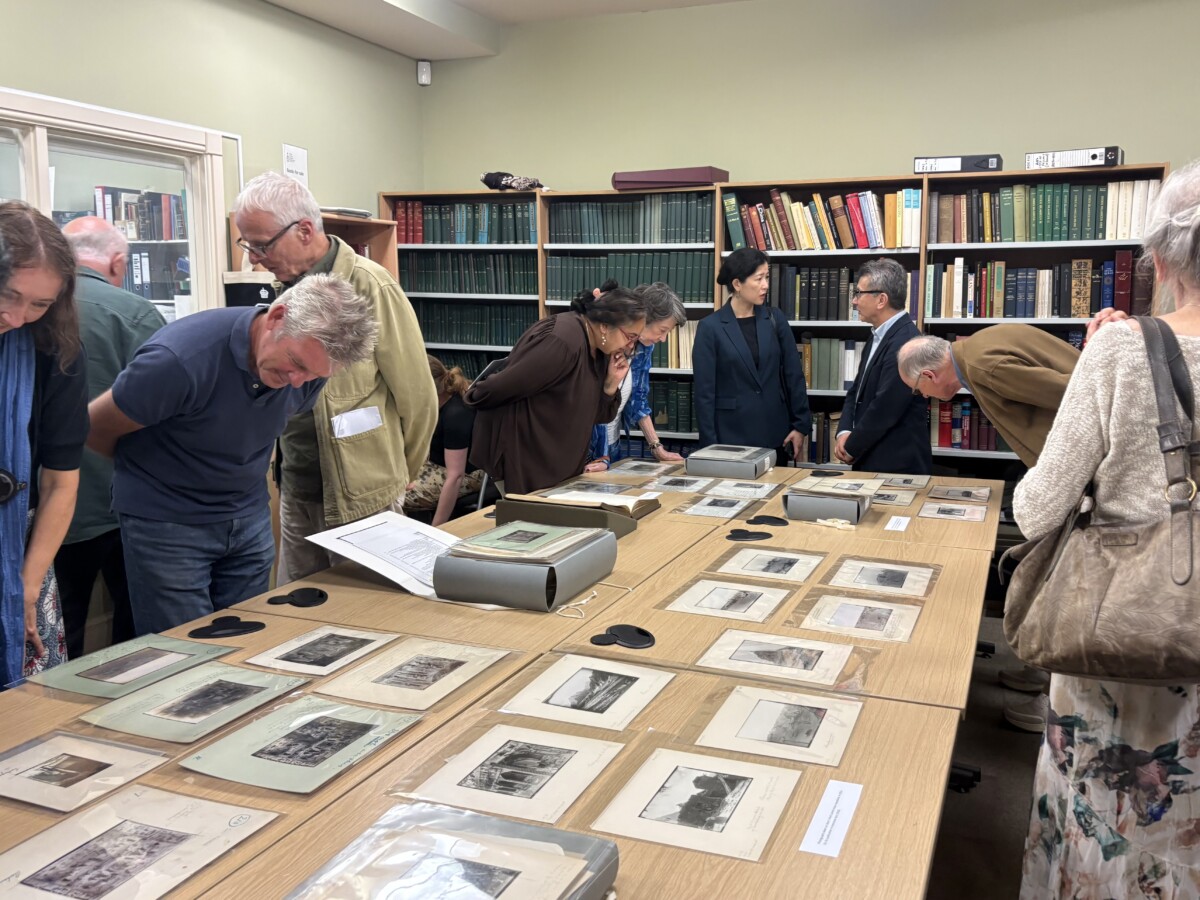
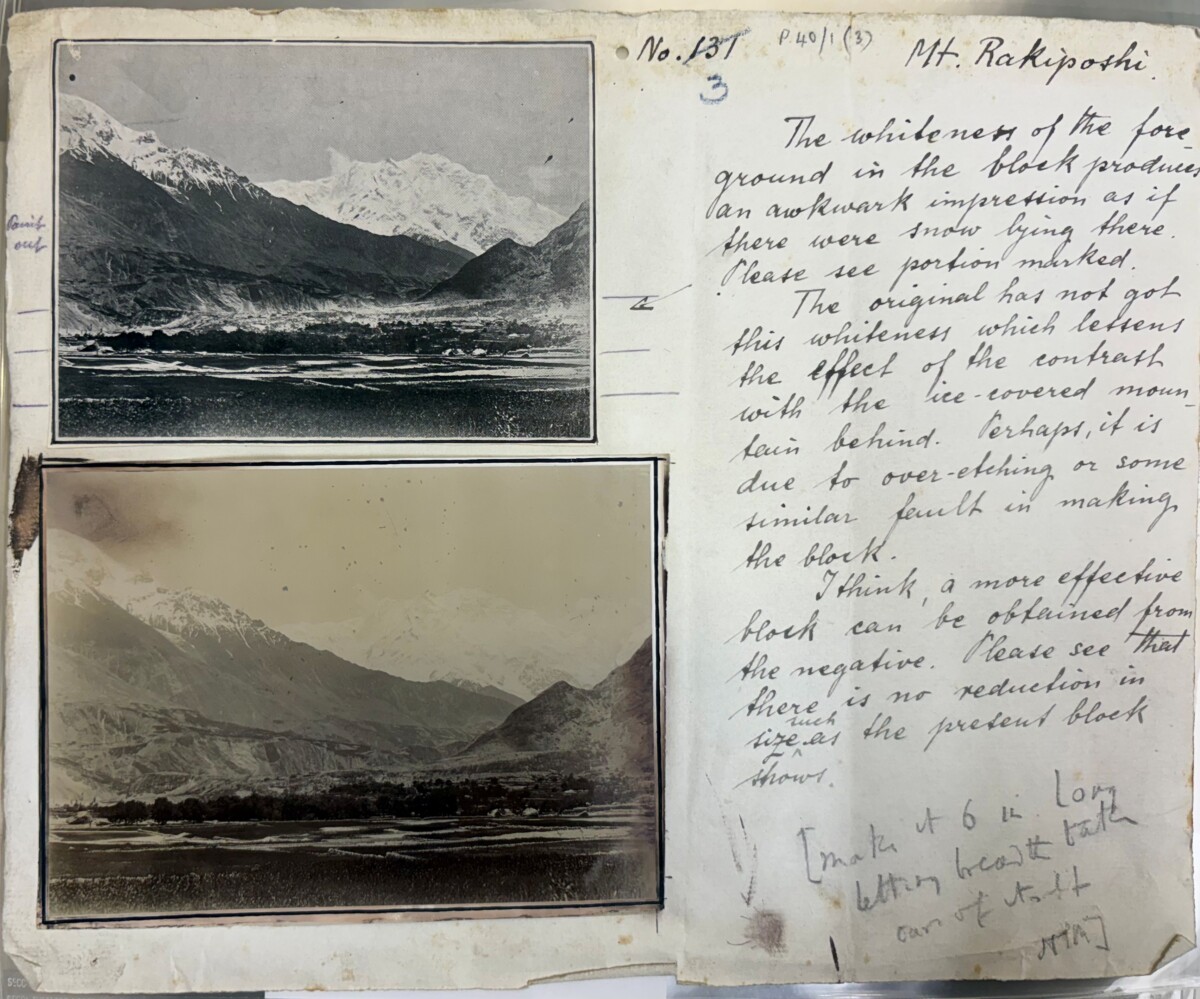
Following the conference sessions on Tuesday, attendees had the opportunity to view a selection of photographs from Stein’s expeditions held in the RAS collections in the Reading Room. A distinctive feature of many of these photographs is that they are mounted on boards and bear annotations by Stein and his close friend and artist, Frederic H. Andrews, providing printing instructions. We were especially struck by how meticulously Stein approached the reproduction of his photographs. He would describe poorly developed prints as ‘distinctly inferior’ to those in his own set, presumably referring that they failed to do justice to the character of the landscapes and sites he had visited.
In the below photograph, for example, Stein comments on the whiteness of the foreground in a photograph of mount Rakaposhi, noting that it might create the impression that there was snow on the surface:
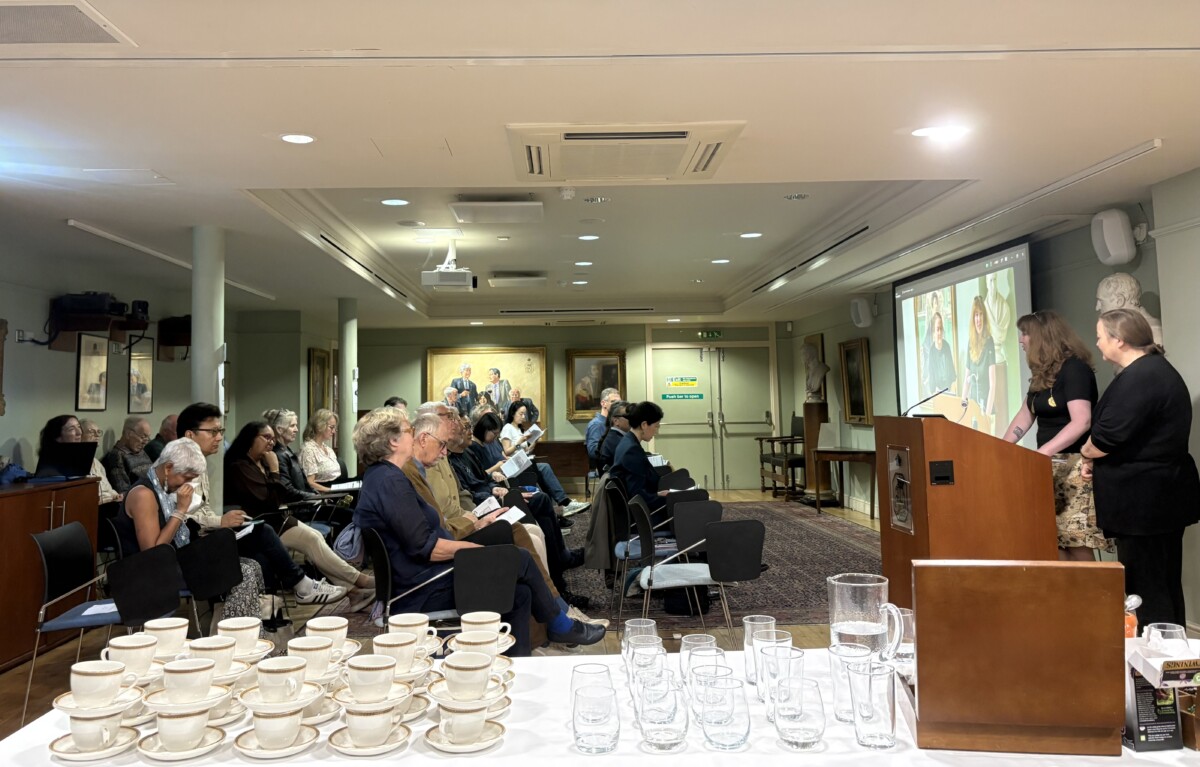
As part of the conference programme on Tuesday evening, Professor Susan Whitfield delivered a public lecture on Stein. Her fascinating talk explored the lives, interests and achievements of Stein’s women friends, while also highlighting the contributions of other women engaged in travel, scholarship and work across Asia. The lecture recording is available to watch here: https://www.youtube.com/watch?v=0PBP1krZ3UU
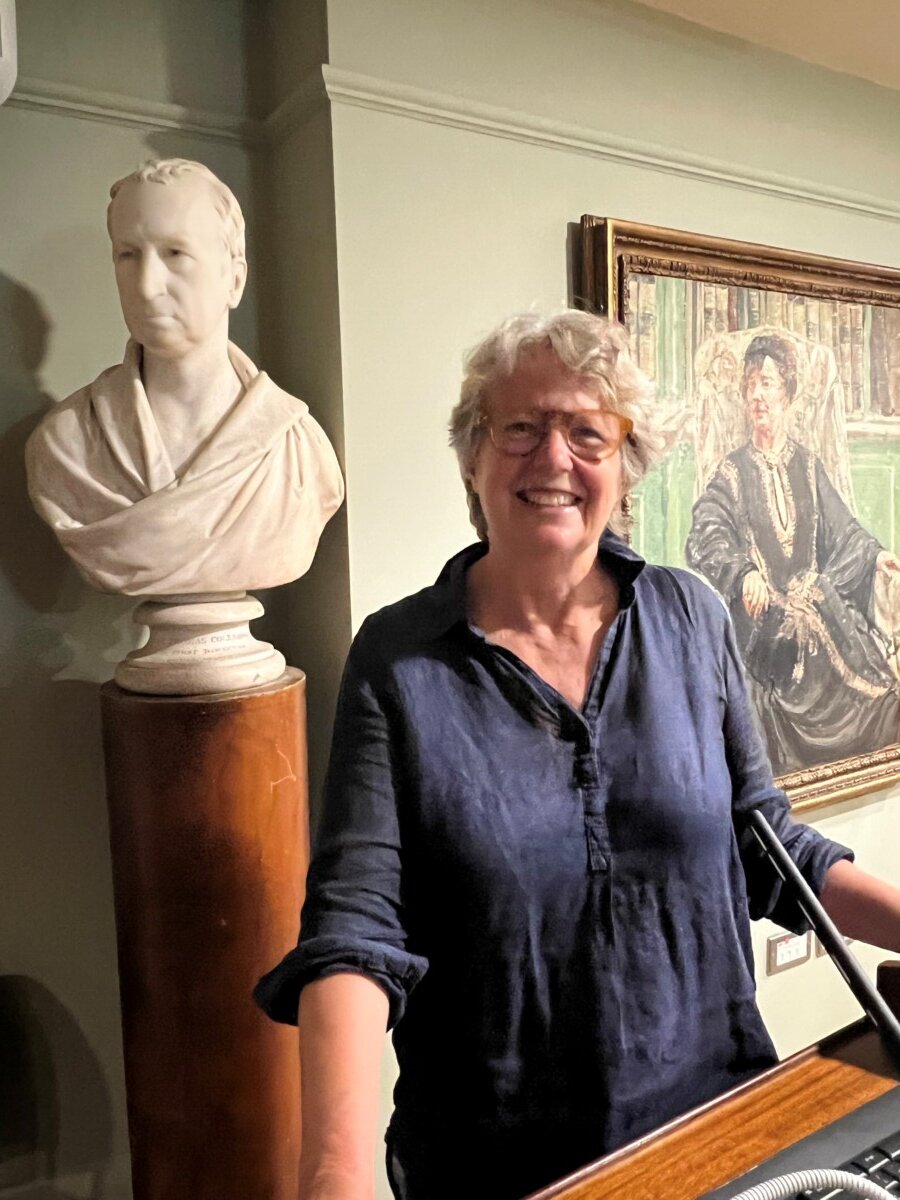
Thank you to everyone who joined us, either in person or online, and helped make the event such a success. Our special thanks go to Professor Susan Whitfield, Dr Helen Wang and Professor Rachel Mairs for organising the conference, and to the Stein Arnold Exploration Fund of the British Academy for its generous support. Recordings of the conference presentations will be available on our YouTube channel soon. If you were unable to attend, or would simply like to revisit the discussions, keep an eye on our YouTube channel for updates.
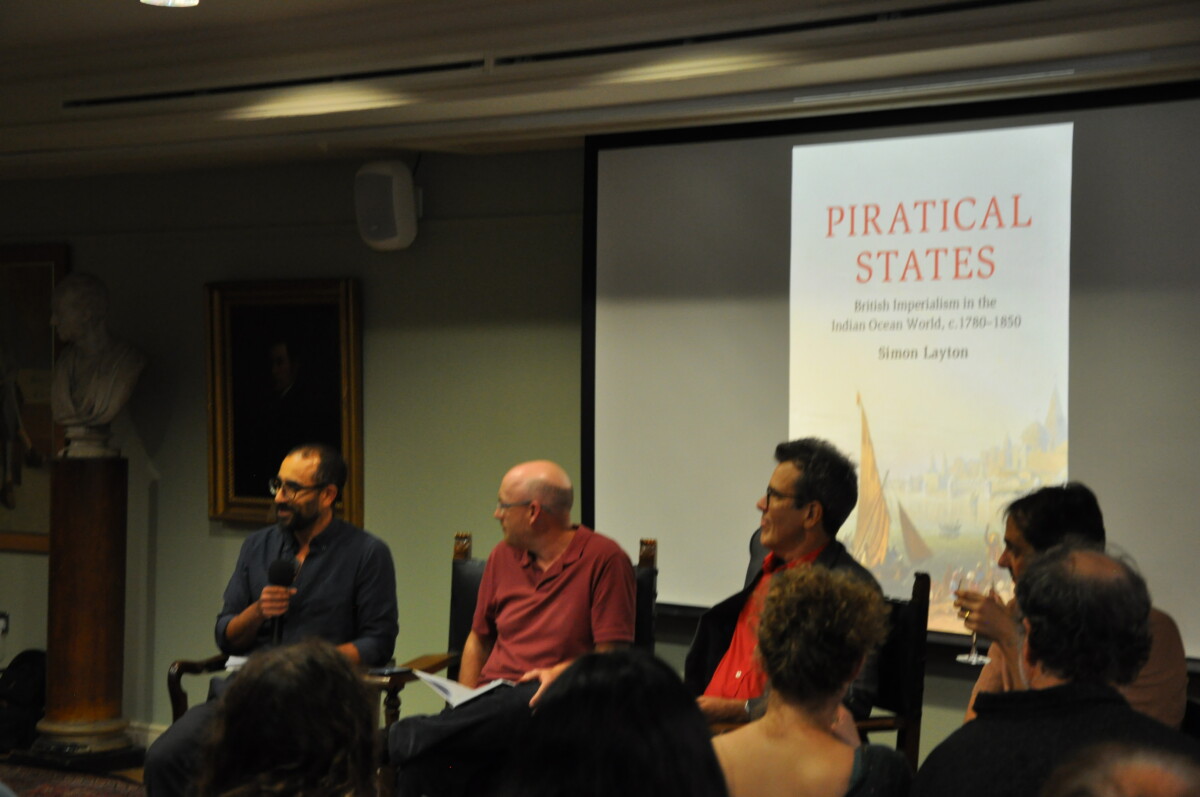
Before we end this post, here is a photograph from the launch of Simon Layton’s book Piratical States: British Imperialism in the Indian Ocean World, c.1780–1850 on Thursday. The event drew a full house and prompted a lively discussion!