#EYAChange: The Bombay Petition
This week, many archives are celebrating the annual Explore Your Archives Focus Week, an initiative that encourages people to discover the stories held in archives. In light of this, I have joined in with the theme of #EYAChange, exploring an item in our collections that resonates with the idea of change.
In addition to institutional archives and the personal papers of individuals connected to Asian studies, our Archive also holds items classified as ‘Special Collections’: standalone documents that entered our collections without an obvious or known connection to the institutional or personal papers. Diverse in material type and subject, these items can offer fascinating insights into the histories of their collectors and donors, as well as the subjects they represent.
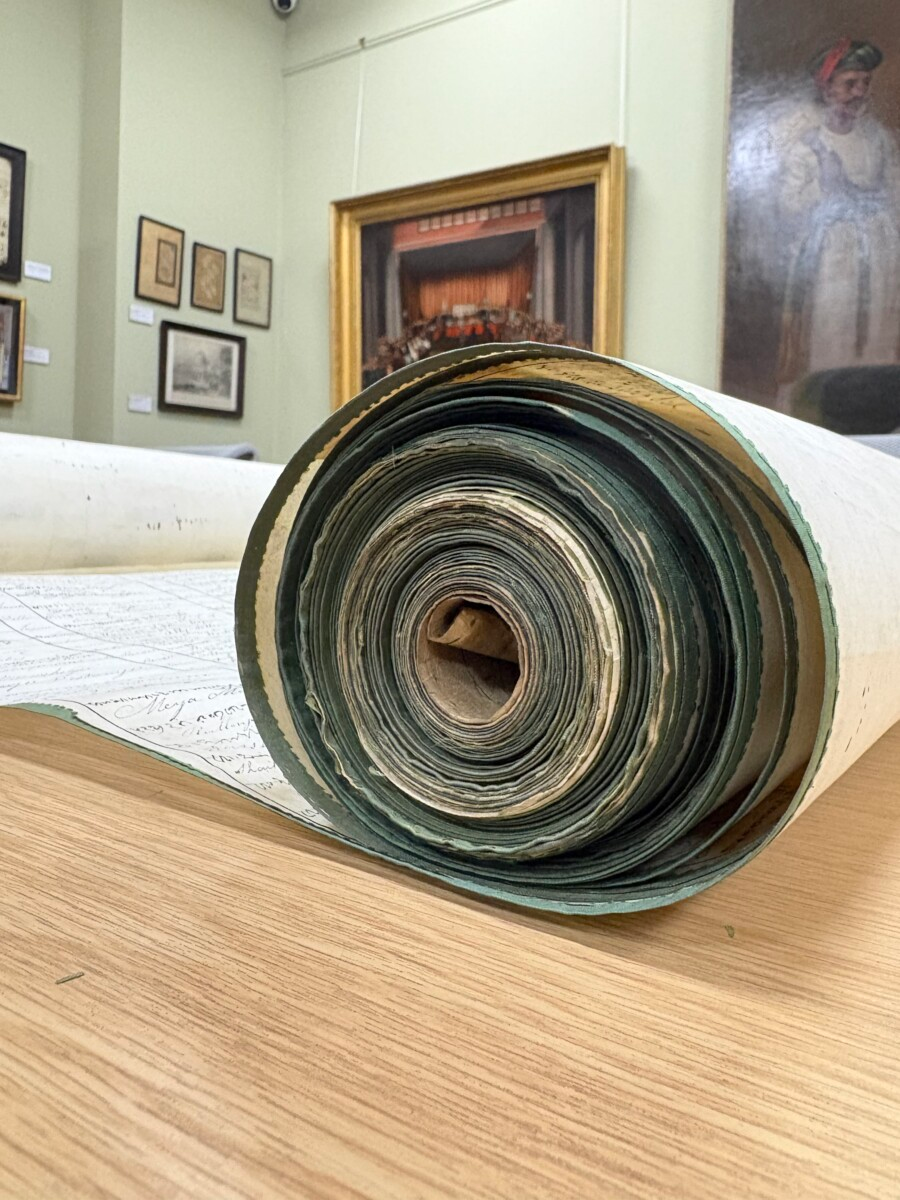
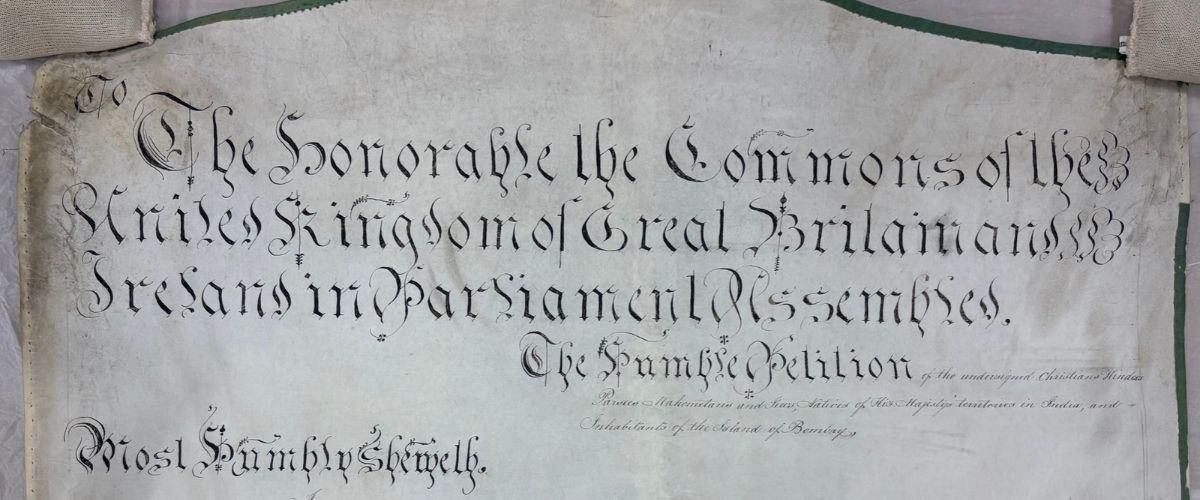
One such item is a copy of a 54-foot-long petition submitted by ‘the Natives of Bombay’ to the House of Commons, dated 25 January 1831 (SC28). Written on 25 skins of parchment, each measuring 10 by 25 inches, the sheets are loosely stitched together to form a continuous roll, making this one of the longest (if not the longest) documents in our collections.
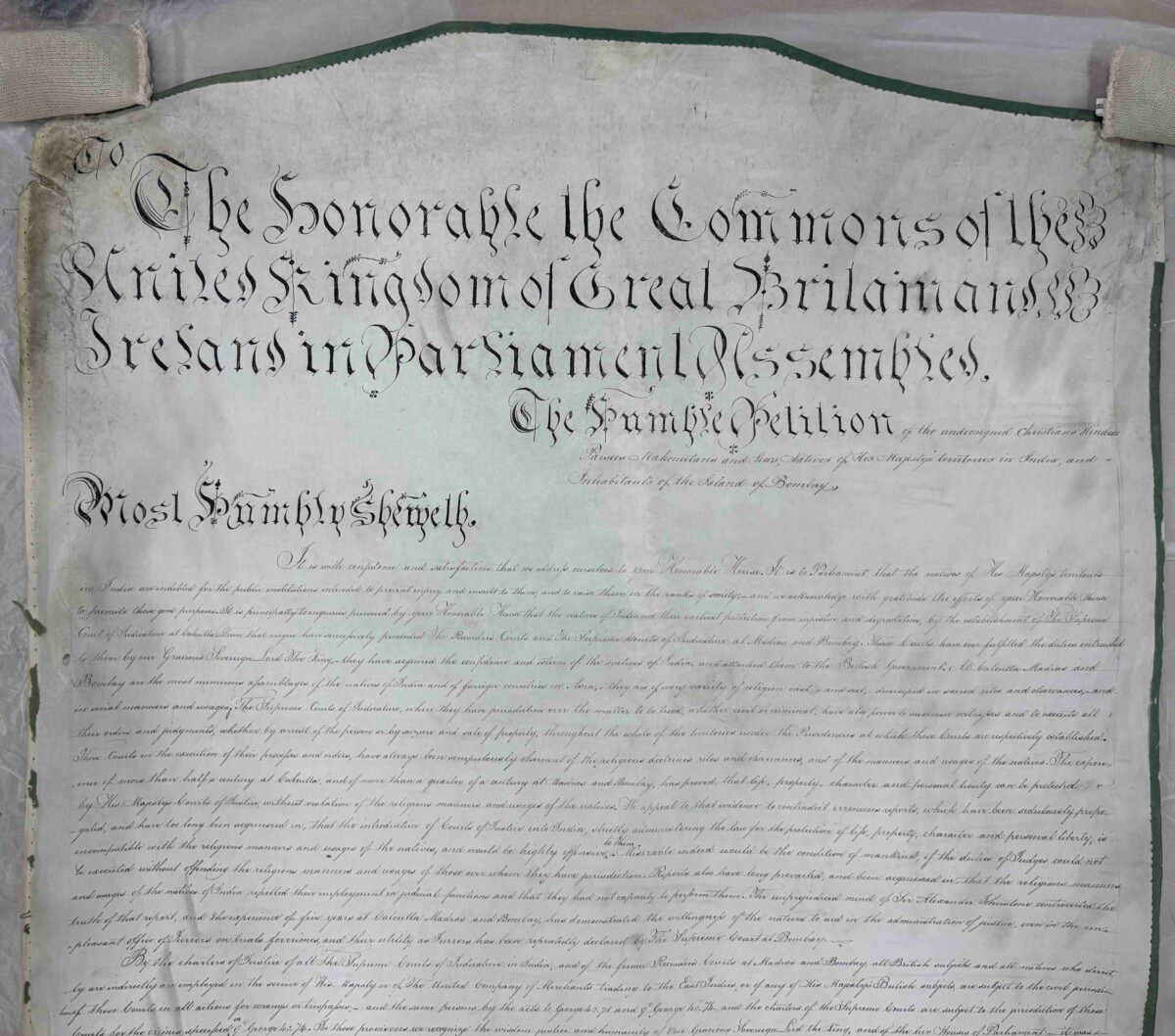
Under British colonial rule, petitions were often submitted by residents, either in Britain and in the colonies, to Parliament as a means of protesting against particular issues, making requests and rallying support for change. In their article, Huzzey and Miller note that during the 19th century, British and colonial subjects across the world sent more than one million public petitions to the House of Commons, with numbers peaking during the 1830s. These petitions addressed a wide range of issues relating to colonial administration, including such as slave trade and the promotion of Christianity.
The 1831 petition in our collections emerged from this broader historical context. Our acquisition records describe it as ‘A Duplicate of a Petition to the House of Commons from Natives of Bombay, and others, Christians, Jews, Chinese, Parsees, Muhammedans, and Hindus, upwards of 4000 in number’. The petitioners put forward three main demands:
- Reform of the judicial regulations of the Government of Bombay to ensure the more impartial administration of justice;
- Admission of locals to civil and judicial offices;
- Greater encouragement for the teaching of English in Indian education.
At the time, racial and religious barriers restricted the opportunities for Indians to hold higher civil and judicial offices within the East India Company. As the petitioners noted, they ‘have strong natural and legal pretensions to participate in the advantages of society, [yet] are almost entirely excluded from offices of trust and emolument’.
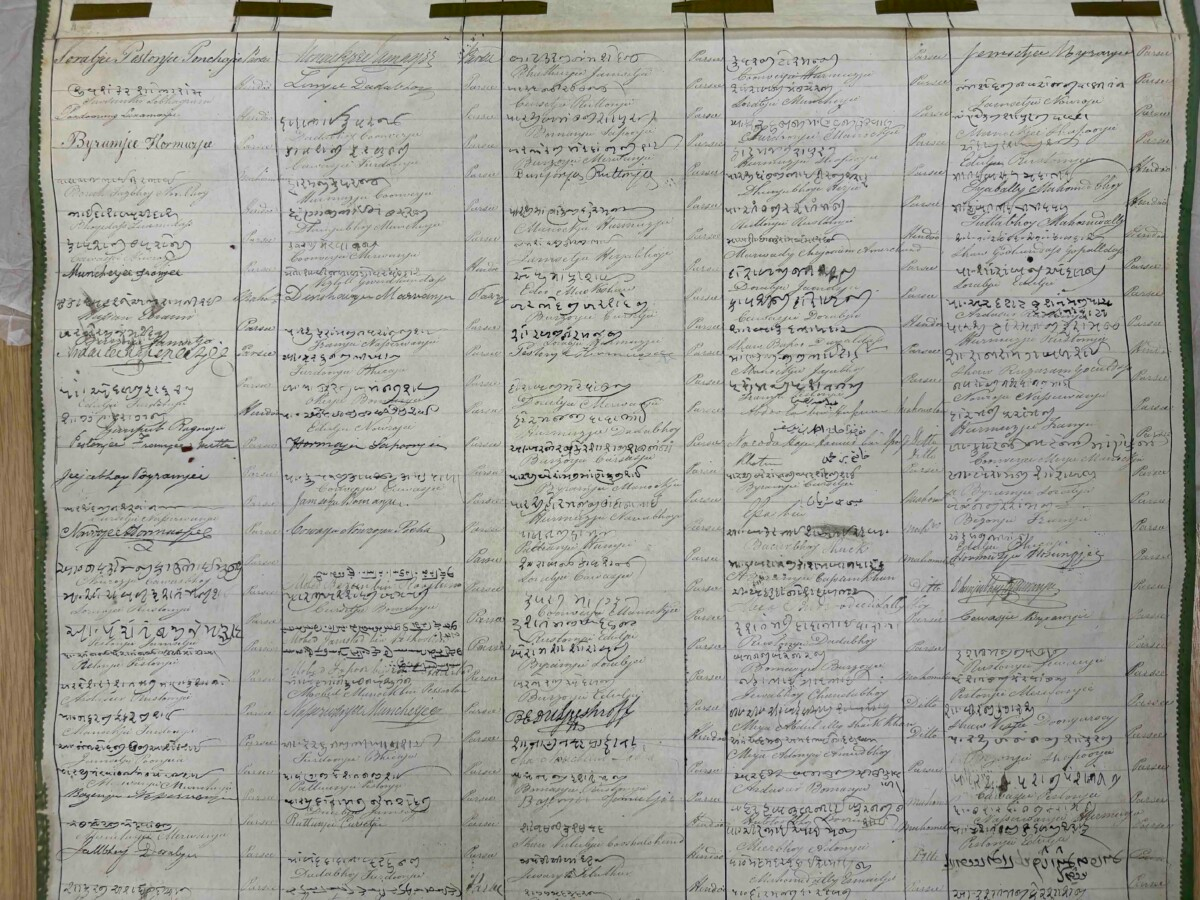
Written in English, with translations into Gujarati and Marathi, the petition was presented to and discussed in the House of Commons by Scottish politician Joseph Hume on 1 September 1831. Its full English text was reproduced in the parliamentary proceedings and can be read here. The petition held in our collections is a duplicate of the original and was presented to us by Sir Charles Forbes in 1835. Forbes himself had presented another, similar petition at the same parliamentary meeting.
What is particularly striking about this petition is the breadth of its signatories. The majority of the signatories were Hindus, Parsees and Muslims, the three major non-European communities residing in Bombay, whose names appear in their original languages, alongside English transliterations. The call for fairer access to public office also appears to have resonated with Christians, Roman Catholics and, interestingly, some English residents, who might otherwise have been expected to benefit from the existing regulations. There were also several Chinese signatories, and I have spotted at least one individual identified as Armenian among the signatures. For me this really speaks to the wide-reaching nature of the issues raised by the petition, and how people from different religious and cultural backgrounds could come together in pursuit of a common goal.
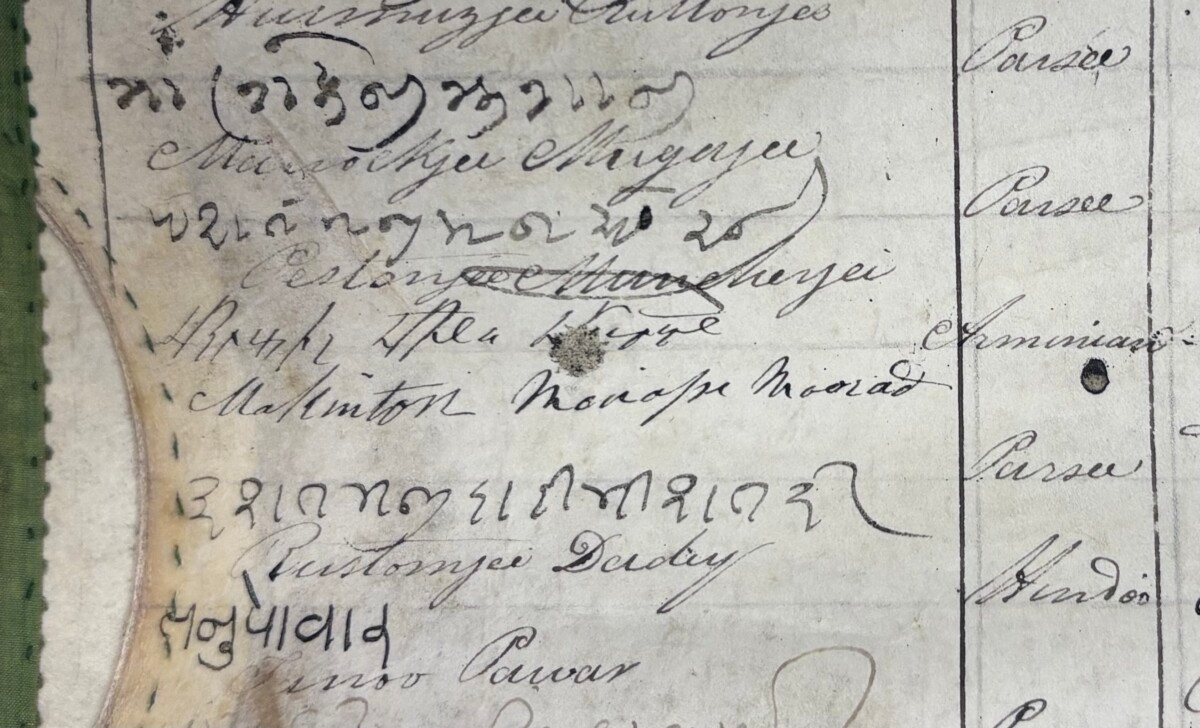
The petitioners’ call for greater equality of opportunity in public administration and fairer enforcement of the law reflects a wider demand for more inclusive and impartial governance. Less than two years after the petition was presented, the Government of India Act 1833 was passed, marking one of the early steps towards greater equality in Indian administration. Among its provisions was the stipulation that no individuals should be disqualified from holding any place, office or employment on account of their religion, place of birth, descent or colour. This addressed part of the demands raised in the petition, but equality in practice remained a distant goal, and open competition for appointments was not introduced until two decades later.
Of course, change can rarely be attributed to one single event, but every event can play a part in bringing change. This remarkable document reminds us that the desire for greater equality and representation has a long history, and that petitions were, and continue to be, one important way in which people sought to make their voices heard.
I hope this has sparked your interest! If you would like to explore the petition further, you are very welcome to book an appointment to view it in person. Just one word of warning – unrolling it takes a little longer than you might expect!