
Collections Evening and Aga Khan Library Visit
Collections Evening 2026
We had a wonderful time at the Society’s annual Collections Evening yesterday. It’s always one of our favourite events of the year: a chance to share new scholarship on our collections and to let guests get up-close to selected items in the Reading Room. This year’s focus was on some truly fascinating work involving our manuscripts and artworks which has expanded both our knowledge of and public access to the collections.
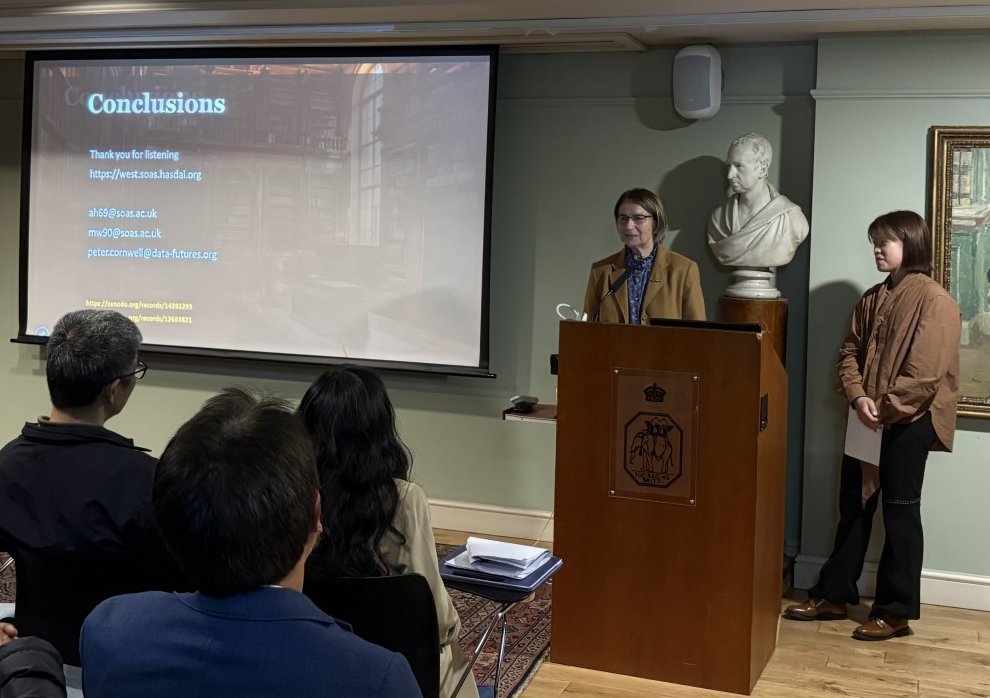
We kicked off with a look at a recent digitisation project by the Multimedia Yasna (MUYA) team at SOAS University, who have been working on Edward William West’s notebooks relating to Zoroastrian studies. Professor Almut Hintze opened the talk by introducing West and explaining why his unpublished notebooks matter so much – packed with copied Pahlavi texts, many of which can no longer be traced or accessed today. Dr Myriadne Wang then walked us through the new digital repository which hosts the digitised notebooks, showing how the images and metadata come together and how the platform supports annotation and collaborative research. It’s a brilliant example of the research avenues that digital humanities can unlock. If you’re curious, you can explore the repository at https://west.soas.hasdai.org with a free ORCID login.
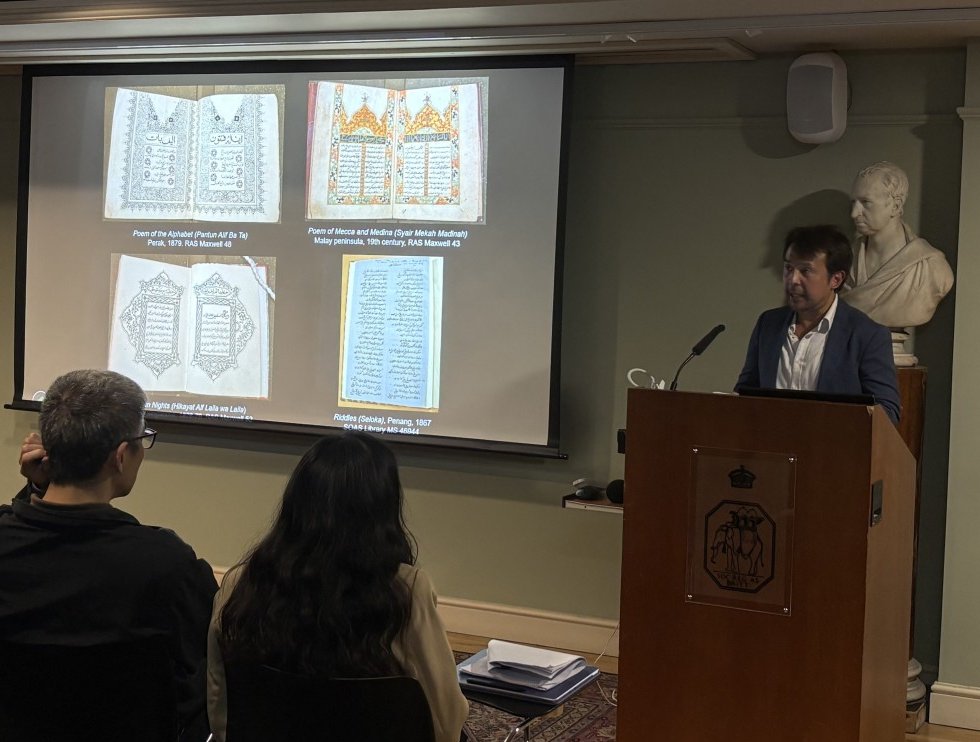
Next, Dr Farouk Yahya, a Fellow of the Society, took us into the world of the Society’s Malay manuscripts donated by colonial official William Maxwell. Maxwell arrived Malaya at the young age of 18 and started collecting and commissioning copies of manuscripts soon after. Using manuscript evidence and historical sources, Farouk traced the origins of Maxwell’s collection back to private libraries in the Malay Peninsula, including the Perak royal court and Maxwell’s local acquaintances. Over 30 of these manuscripts have now been digitised and are available to browse in our Digital Library: https://royalasiaticcollections.org/collection/mm2-maxwell. If you’d like to dive deeper, Farouk’s recent article is available here: https://journals.openedition.org/archipel/9474.
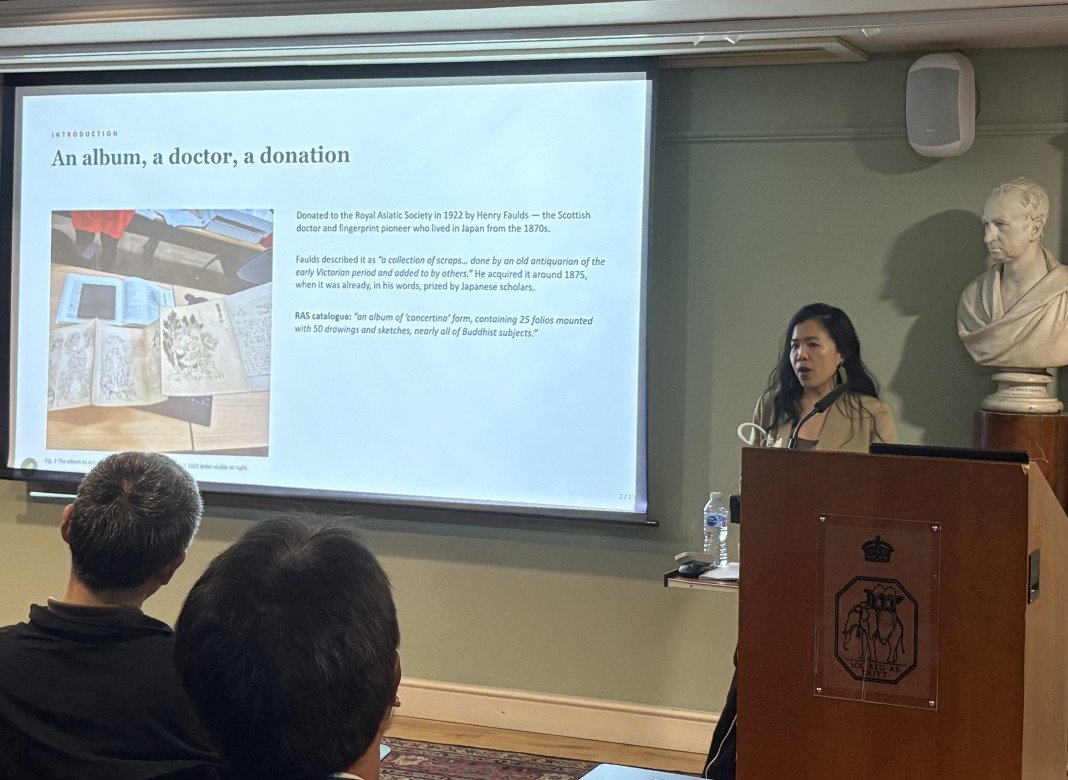
Our final talk of the evening was delivered by Niyu Lin of the Courtauld Institute, who introduced us to a Japanese Buddhist album donated by Scottish missionary and doctor Henry Fauld. The album is linked to the now-lost Edo‑period painting atelier Kanda Sotei. Niyu gave a captivating presentation on what Fauld described as ‘a collection of scraps’, arguing for its value and revealing the hidden underlayer paintings now covered by Buddhist iconography drawings. It was fascinating to learn of how the item transformed from a personal album of literati sketches into a collective teaching manual for religious art.
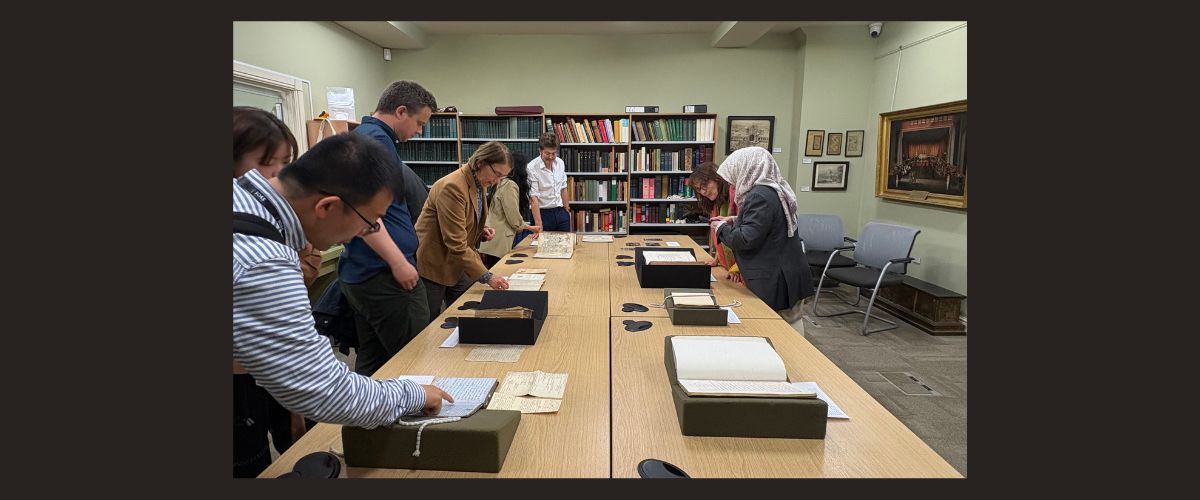
We were thrilled to have a full house in the Lecture Hall, and the conversations carried on in the Reading Room, where guests could take a closer look at the items featured in the talks. A huge thank‑you to all our speakers for making the evening so memorable, and to everyone who joined us – whether in-person or online.
Visit to the Aga Khan Library
Earlier this week, members of the Society enjoyed a special visit to the Library of the Aga Khan Centre, tucked just behind King’s Cross. The visit was kindly hosted by Professor Walid Ghali, Head Librarian, who – together with his team – guided us through the Library and Gallery spaces and introduced us to the richness of their Islamic collections. We were privileged to see some selected treasures from the manuscript collection, such as a 10th-century Arabic text on Islamic astronomy and two beautifully illustrated Qu’rans from Kashmir. Before finishing our visit, we took a stroll in the Centre’s contemporary Islamic Gardens – an incredibly open, green and contemplative space in the heart of central London.
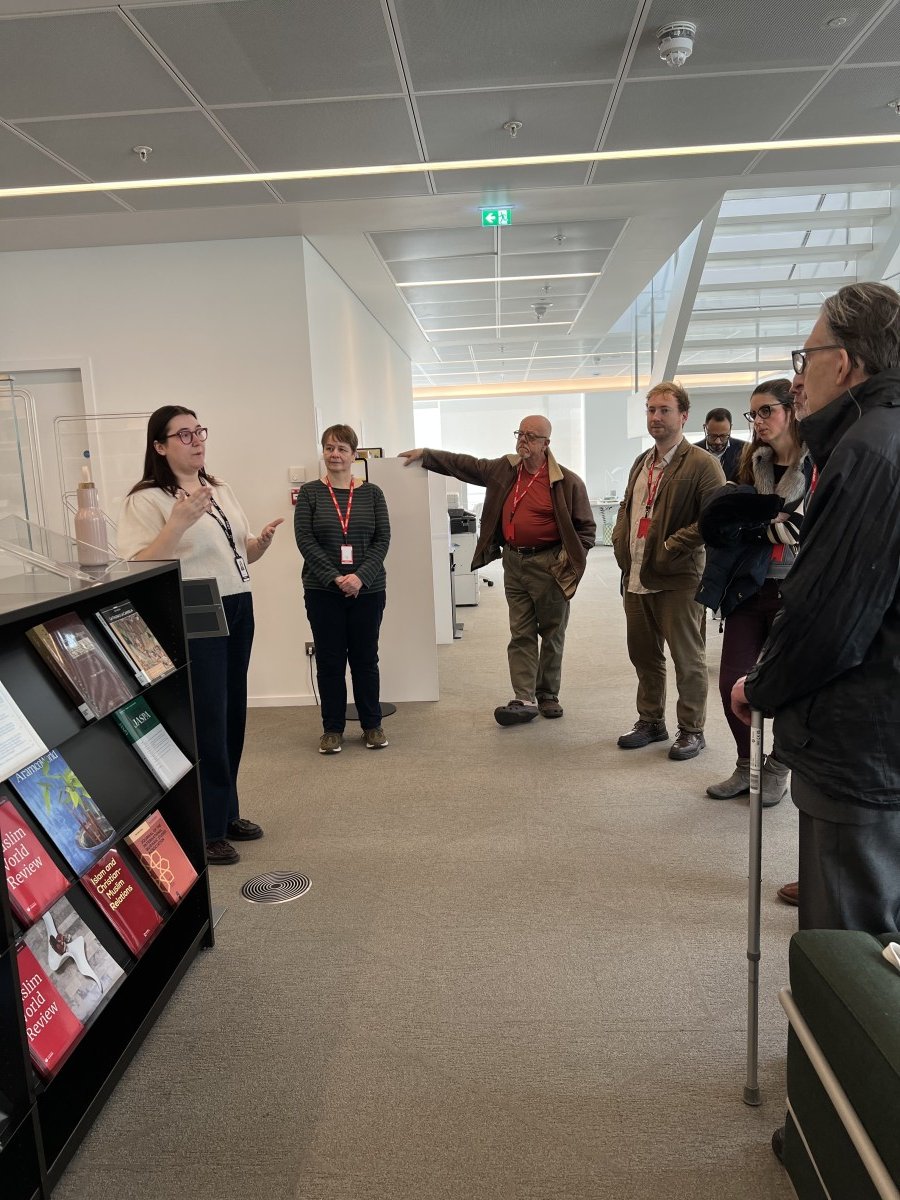
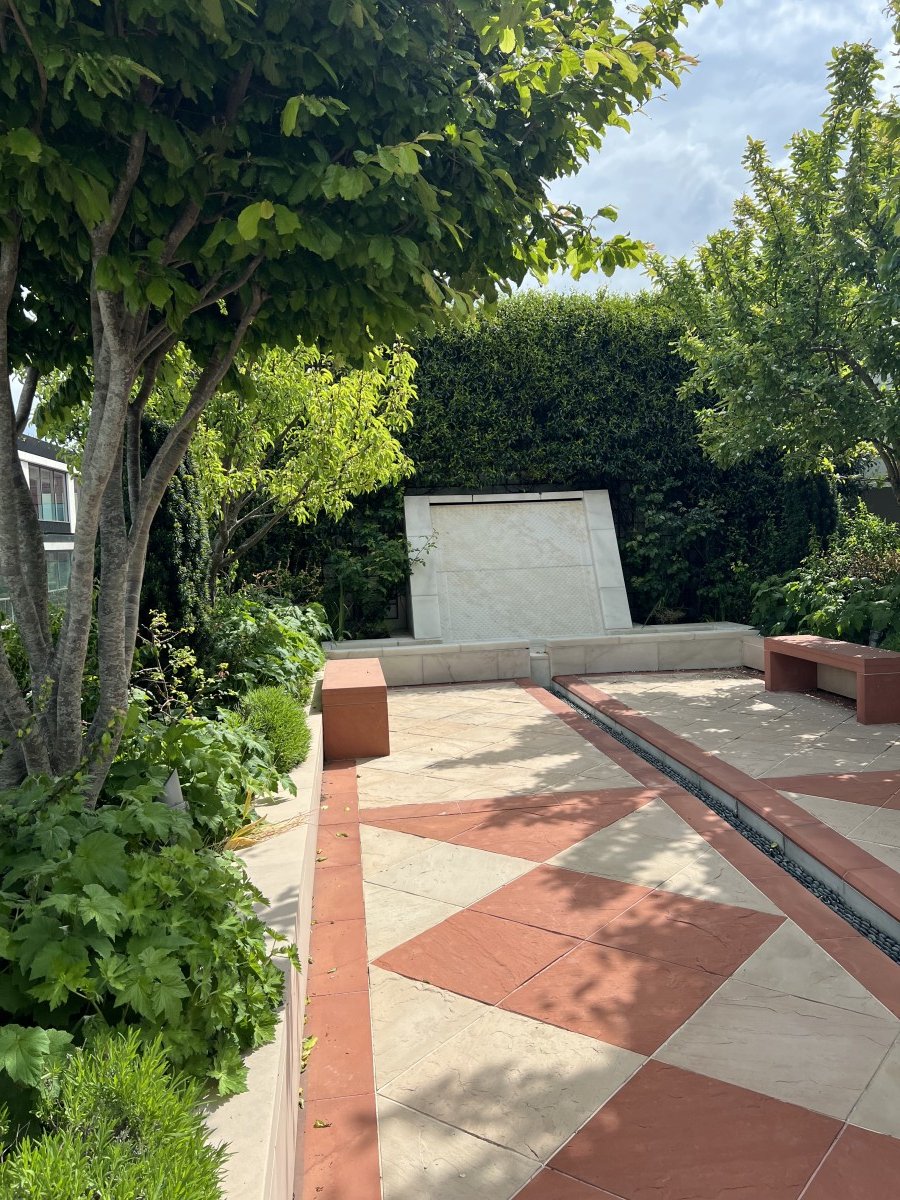
We’d like to thank the Aga Khan Library team for welcoming our members and for arranging such an engaging visit. The Library is open to the general public, and free tours exploring the Centre’s buildings can be booked through their website: https://www.agakhancentre.org.uk/visit/