
2025 Bayly Prize Winners & More Awards Open for Nominations
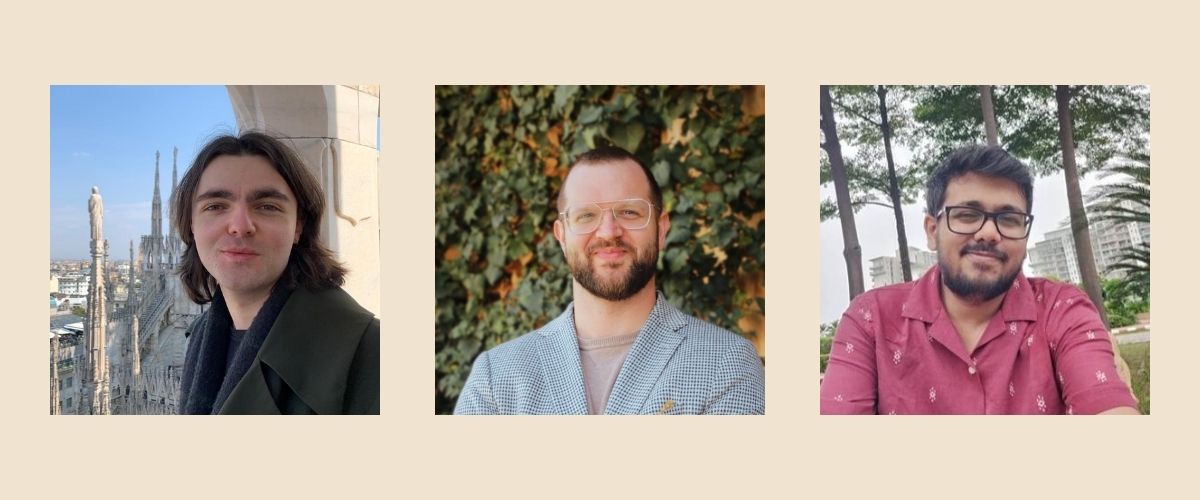
The Society is glad to announce that the judges for the Bayly Prize have reached their decision about the winners for the 2025 Bayly Prize. Instigated in 2018, the Bayly Prize is awarded for a distinguished thesis in an Asian subject falling within the scope of the Journal of the Royal Asiatic Society or the Journal of Modern Asian Studies. The winners are:
~~~
Angus Russell – Winner
University of Cambridge, for his thesis: Tamga: a fiscal form in post-Mongol Moscow

Angus Russell is a research fellow at King’s College, Cambridge, where he works as part of the college’s Silk Roads Programme. His research explores the history of late medieval Eurasia, with a particular focus on interactions between the Mongol, Islamic, and Slavic worlds. He is currently completing the manuscript of his first book – provisionally entitled Empire and forbidden wealth in post-Mongol Eurasia – which builds on his PhD thesis to contend with the moral entanglements of taxation in Rus, Iran, and the Black Sea after the Mongol conquests. He has also recently published standalone articles on legal and economic immunity after the Mongols, and on a fourteenth-century charter from southern Rus that uses a unique illumination to express its political ambition. For the next two years he will be on leave from Cambridge to take up a position as part of the EurAsian Transformations cluster at the Austrian Academy of Sciences in Vienna.
Daniel Wojahn – Second place winner
University of Oxford, for his thesis: Khrims in Context: Law, Power, and the Negotiation of Mongol Rule in 13th-Century Central Tibet
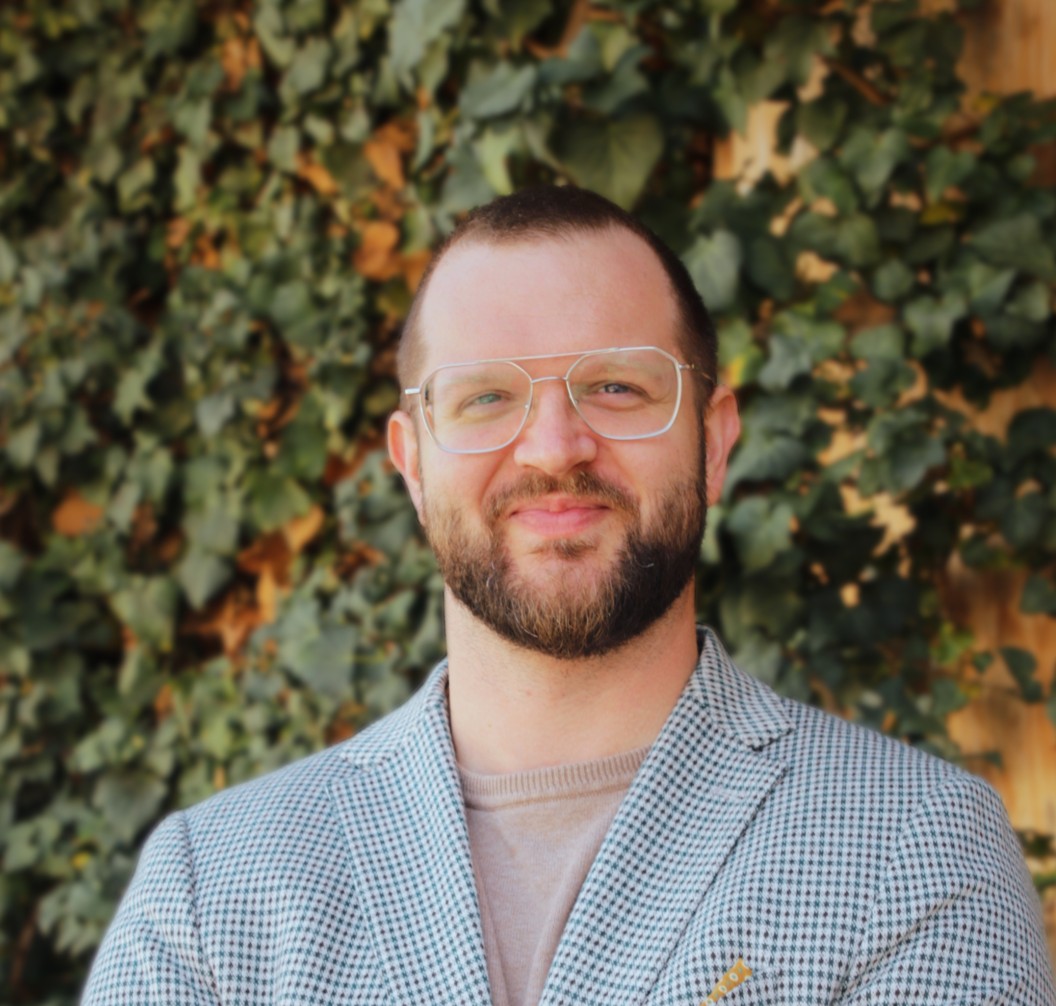
Daniel Wojahn is currently a postdoctoral researcher at Oxford, working on a project about law in historic Tibet. They are translating and comparing a fascinating collection of legal manuscripts, asking why Tibetan rulers produced so few legal texts and what those texts were actually meant to do. His own work is particularly concerned with how the Dalai Lamas’ government adopted and reshaped the legal traditions of the rulers it displaced.
Surajkumar Thube – Third place winner
University of Oxford, for his thesis: Towards a Non-Brahmin Hinduism: Caste, Dharma, and the Marathi Public Sphere in Western India, circa 1890-1930

Surajkumar Thube is currently working as a Visiting Professor at the Political Science Department at Ashoka University, India. He currently delivers courses on Caste in Modern and Contemporary India, the Politics of Music in India, and Global Politics and Football. He is in the final phase of revising his PhD thesis, titled Towards a Non-Brahmin Hinduism: Caste, Dharma, and the Marathi Public Sphere in Western India, circa 1890 – 1930, for publication as a monograph, for which he has received a provisional acceptance offer from Oxford University Press. This book focuses on how the evolving non-Brahmin print and performative spheres in Western India, through their writing styles, content, speeches, linguistic registers, and street performances, sought to reconstruct themes and issues concerning caste, dharma, and Brahminism in distinctly anti-Brahminical idioms. This book will be published in the Oxford Historical Monographs Series. After this, he will soon start working on a short book which will be a transnational intellectual history project that brings together the writings of Jotirao Phule, a pioneering radical writer and reformer from 19th-century western India, along with some of the pioneering abolitionists and agnostic writers from 19th-century America. For this book, he has received a contract from Cambridge University Press, and it will be published in the ‘Global Humanities’ Cambridge Elements series. Additionally, he is working on a historiographical review essay of Sport in South Asia.
~~~
Congratulations to all of this year’s winners! We look forward to welcoming them to a formal celebration at the Society in the coming months, where they will have the opportunity to share more about their research with our community. Further details will be announced soon. At the same time, nominations for the 2026 Bayly Prize are currently open for PhD students with their thesis approved within the calendar year of 2025. If you’re interested, please visit the Award page for full submission guidelines and get you application in by Monday 28 September 2026!
In connection, we’ve more exciting news about our awards to share – three more Society awards are now open for nominations. These are:
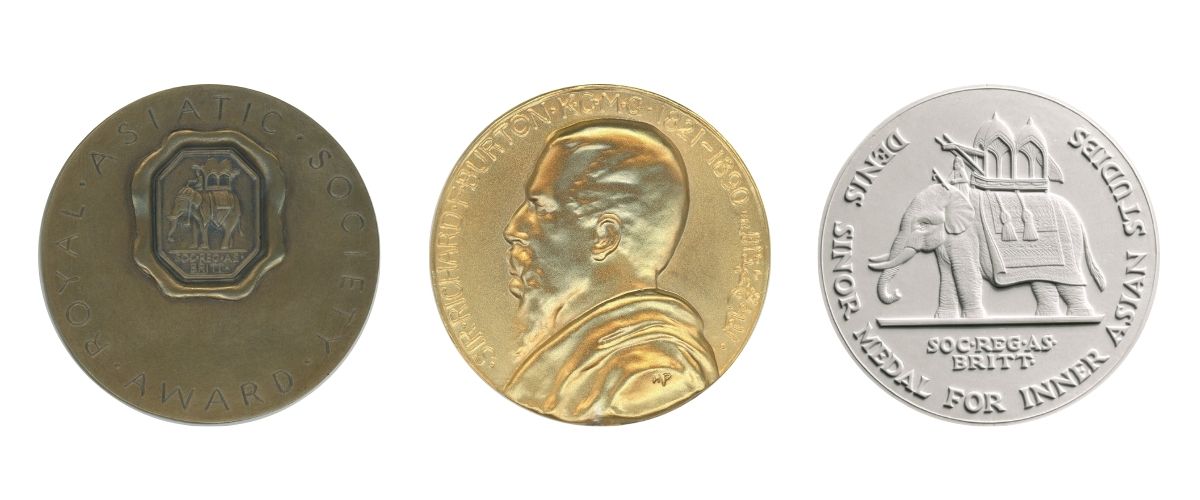
The Denis Sinor Medal for Inner Asian Studies (details)
The Denis Sinor Medal is awarded to honour scholars who have made an exceptional contribution to the field of Inner Asian Studies.
The Royal Asiatic Society Medal (details)
The Royal Asiatic Society Medal is awarded to a scholar who has made an outstanding contribution to the field of Asian Studies.
The Richard Burton Medal (details)
The Sir Richard Burton Medal is awarded to an individual who has undertaken long-term field research in Asia, especially when conducted in close collaboration with local interlocutors or under challenging circumstances. This research may involve either the wide-ranging investigation of a broad cultural or geographic region, or the intensive study of a single locality.
Submission Guidelines
- Nominations should be submitted by Fellows of the Royal Asiatic Society.
- Each nomination should include a statement of support (maximum of 500 words) outlining the significance and impact of the nominee’s work.
- All nominations should be sent to the Director, Alison Ohta at ao@royalasiaticsociety.org to be received by 1 September 2026.
More details about the awards can be found on the respective Award page. If you have any enquiries, please contact our Director, Alison Ohta at ao@royalasiaticsociety.org.